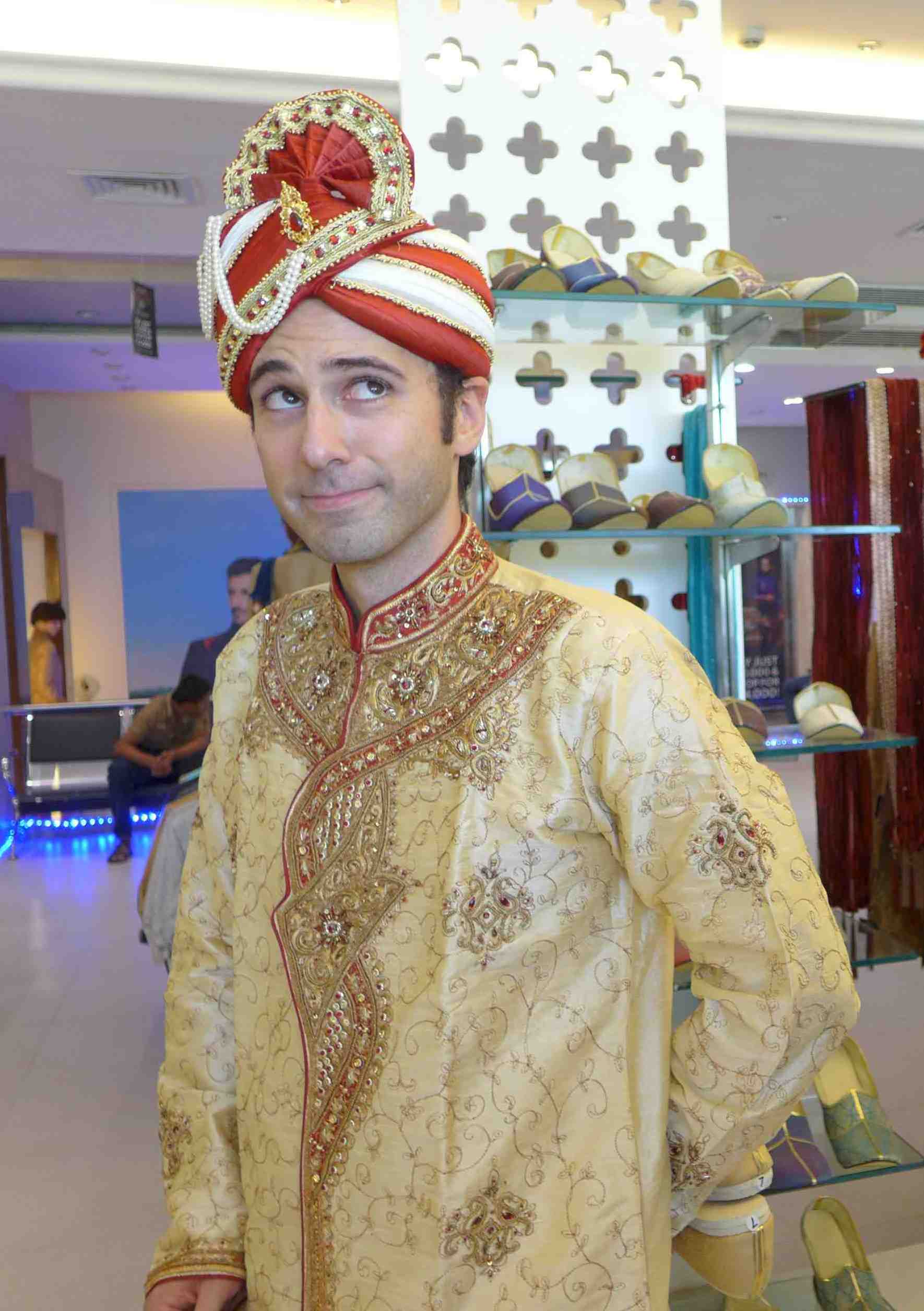
Groom looking skeptical about donning a wedding turban. Got vetoed. Too bad.
Once we were settled at the hotel, shopping for the wedding began! The first day we shopped for the men and got them pretty much outfitted in one go. Done and done.
Unbeknownst to the female American contingent, our Indian hosts had purchased wedding sarees, bangles, and matching jewelry for us before we arrived; they were all very beautiful and it was a great honor to receive them as gifts. However, most of us needed to buy additional clothes for the mehndi (moderately formal) and the wedding night dinner reception (evening formal), and the bride needed to buy several sarees for different parts of the wedding. Interestingly, some were later formally presented to her as “gifts” after she chose them–relatives gave money for them in what seems to be in Indian version of the wedding trousseau.
We girls soon discovered we were in for a more labor-intensive shopping experience than the guys. Saree shopping for the bride took us to several different stores, plus shopping in India requires stamina, determination, and the ability to keep calm while surrounded by store personnel….and I do mean surrounded.
Clothing stores in India have more floor personnel than the Apple Store–no exaggeration–and they swarm around new customers, especially those that appear to be looking for high-ticket bridal wear. I got boxed into an aisle by three employees while I was browsing some shawls; that made me a bit claustrophobic and reluctant to do any further shopping for the rest of the trip.
Most of us Westerners felt the same way about this highly attentive approach. I assume this is just employees competing for commissions, but Americans used to some autonomy and space while shopping, so having a salesperson or five on your six felt really high-pressure. This tactic ended up (in our case, anyway) being counterproductive, as most of us backed out of the shopping fray as soon as possible–no income from impulse buys here.
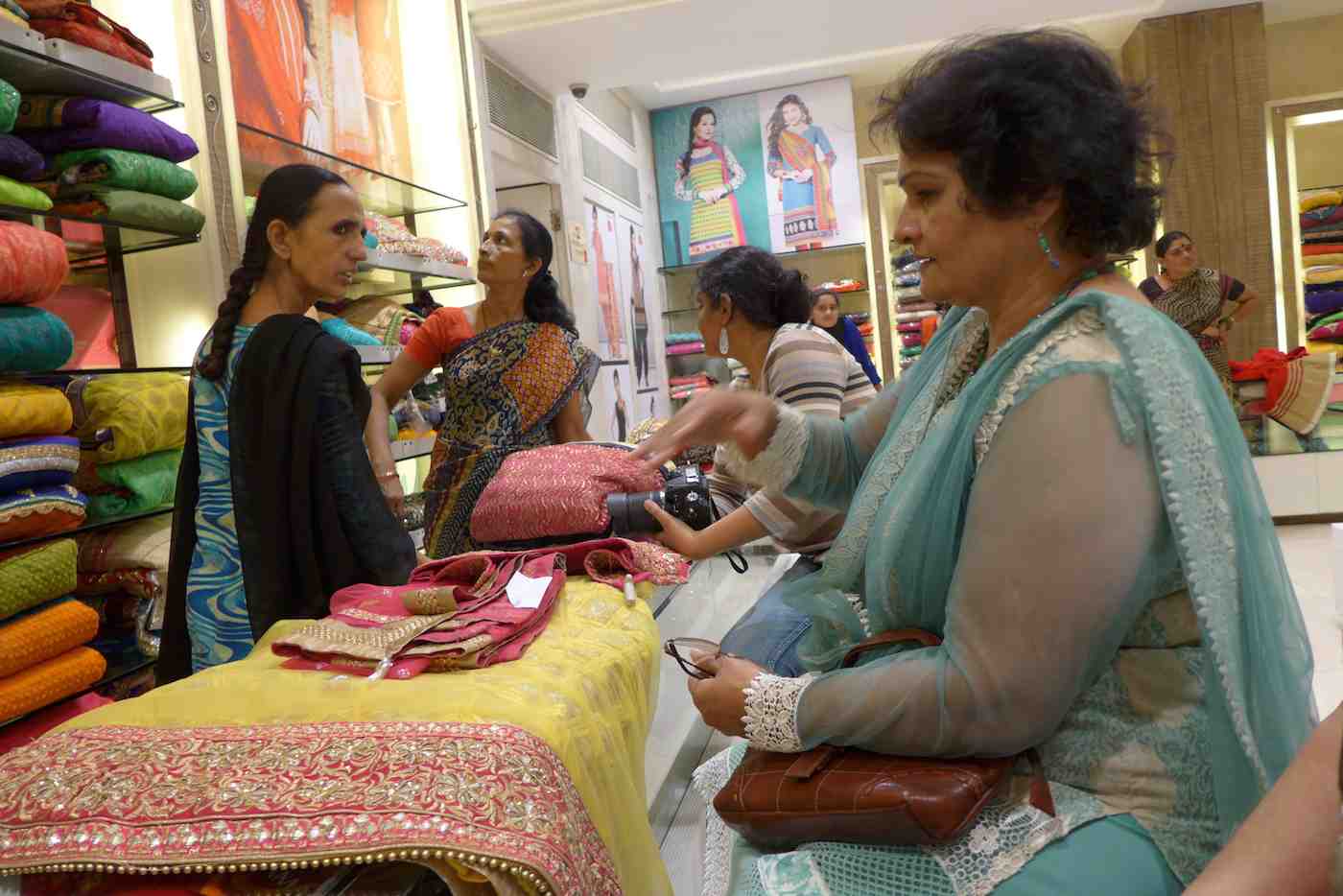
Saree Counter @ Kajree Clothing Store, Pune
Though you can get “pre-made” sarees, the majority of them are sold as flat layers of fabric, two of which are then tailored or “stitched” into the choli (blouse) and petticoat. These sarees are six yards in length (a traditional Maharastran saree is nine yards–we saw a few older rural women wearing them), with inner layers of different colors and some edging to be stitched into the blouse. The fancy edge on top of the saree is the pallu, which ends up draped over the shoulder.
You can’t just pull sarees down off the shelves yourself and start pawing through the layers, however. Salespeople flock and a flurry of flopping fabric starts filling the counter in front of you. Other employees start folding and reshelving the rejects when the pile gets too high.
Most of the interactions occurred in Marathi so we didn’t understand what was being said, but we could understand the process pretty well. It helps to be an absolute shopping diva like the bride’s mom. I was in awe of her ability to get what she wanted without dithering or fuss. It was clear to me that if you don’t grab the steering wheel of the saree shopping bus, you’ll get run over–or suffocated in a pile of prospective purchases.
At one of the stores we went into a special room to be shown hand-woven silk sarees. These were the most beautiful fabrics I have ever seen. We took off our shoes to enter and sat on the edge of a cushioned mat as saleswomen started pulling sumptuous, luscious iridescent fabrics out of the closet behind them; glorious colors and textures that seemed to glow with a light of their own.
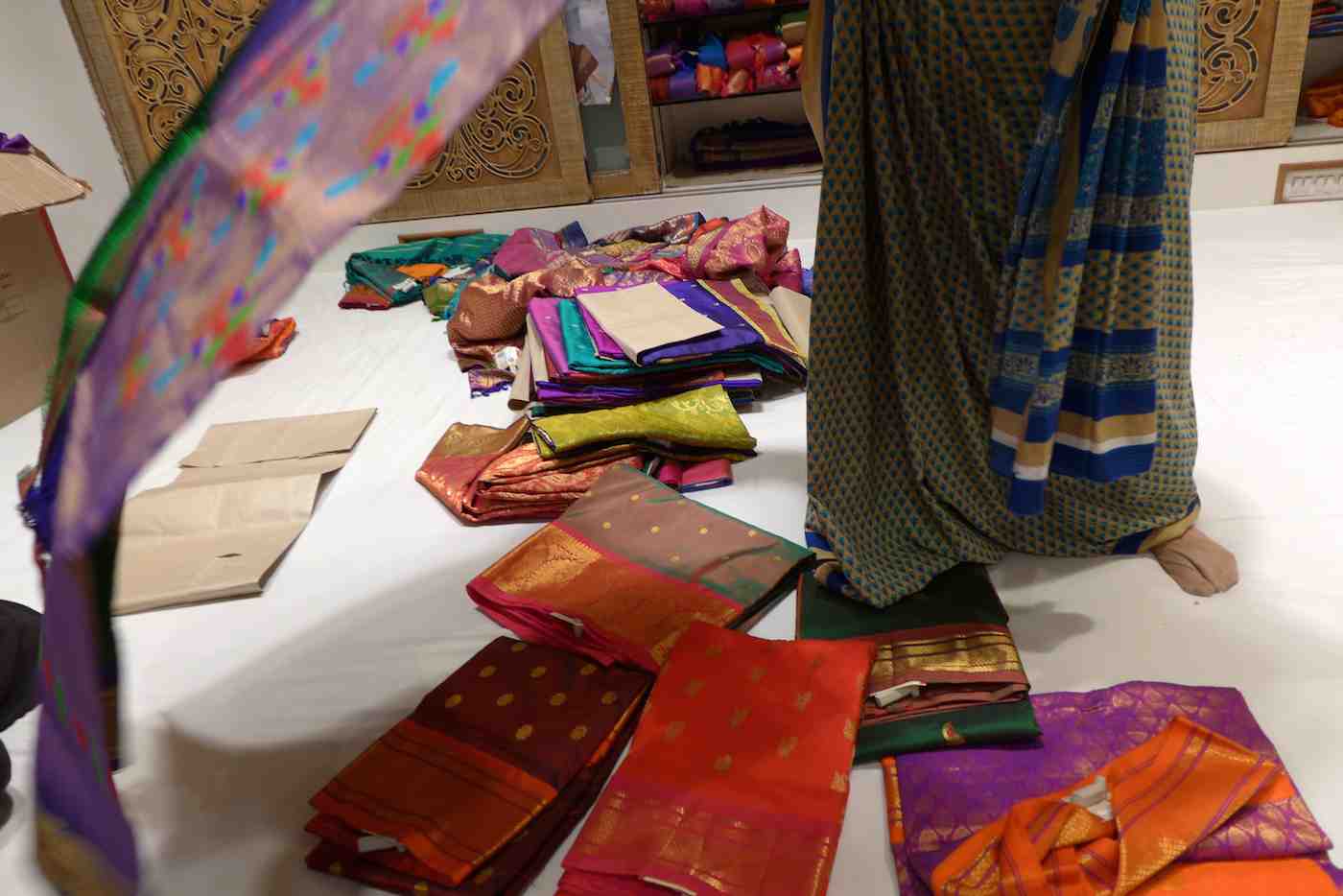
Handwoven silk sarees.
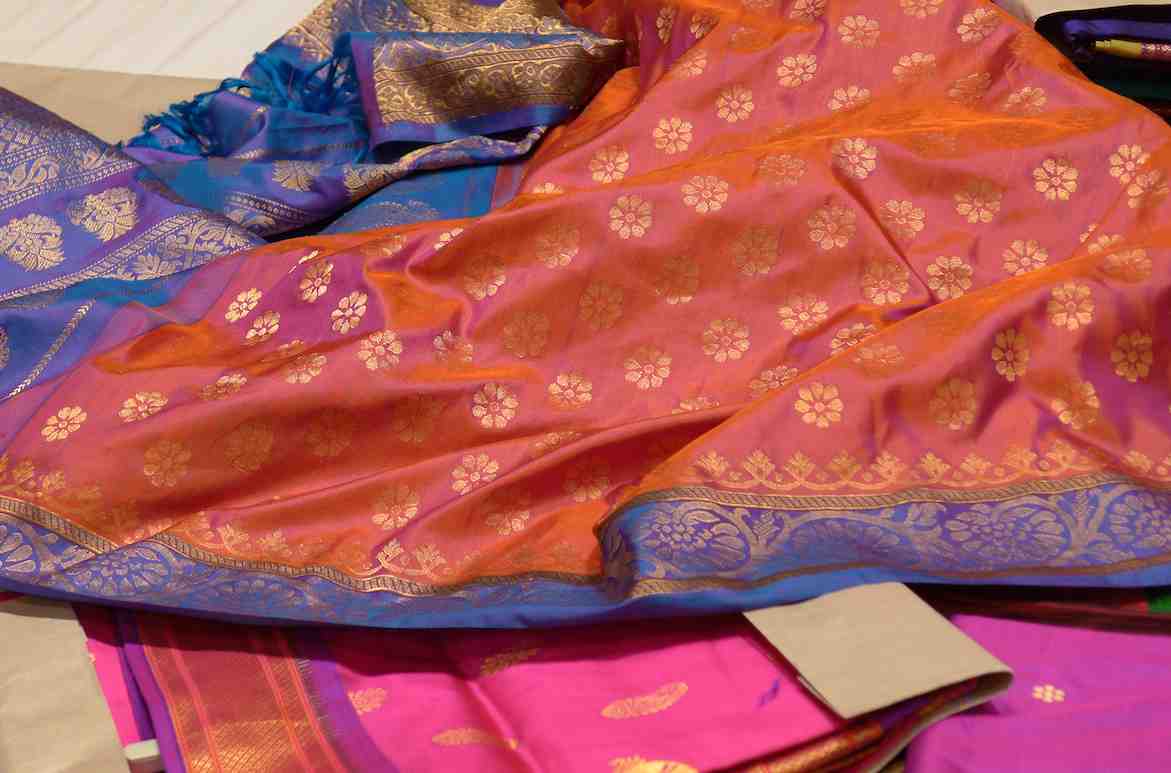
Glorious colors, all changing under the light.
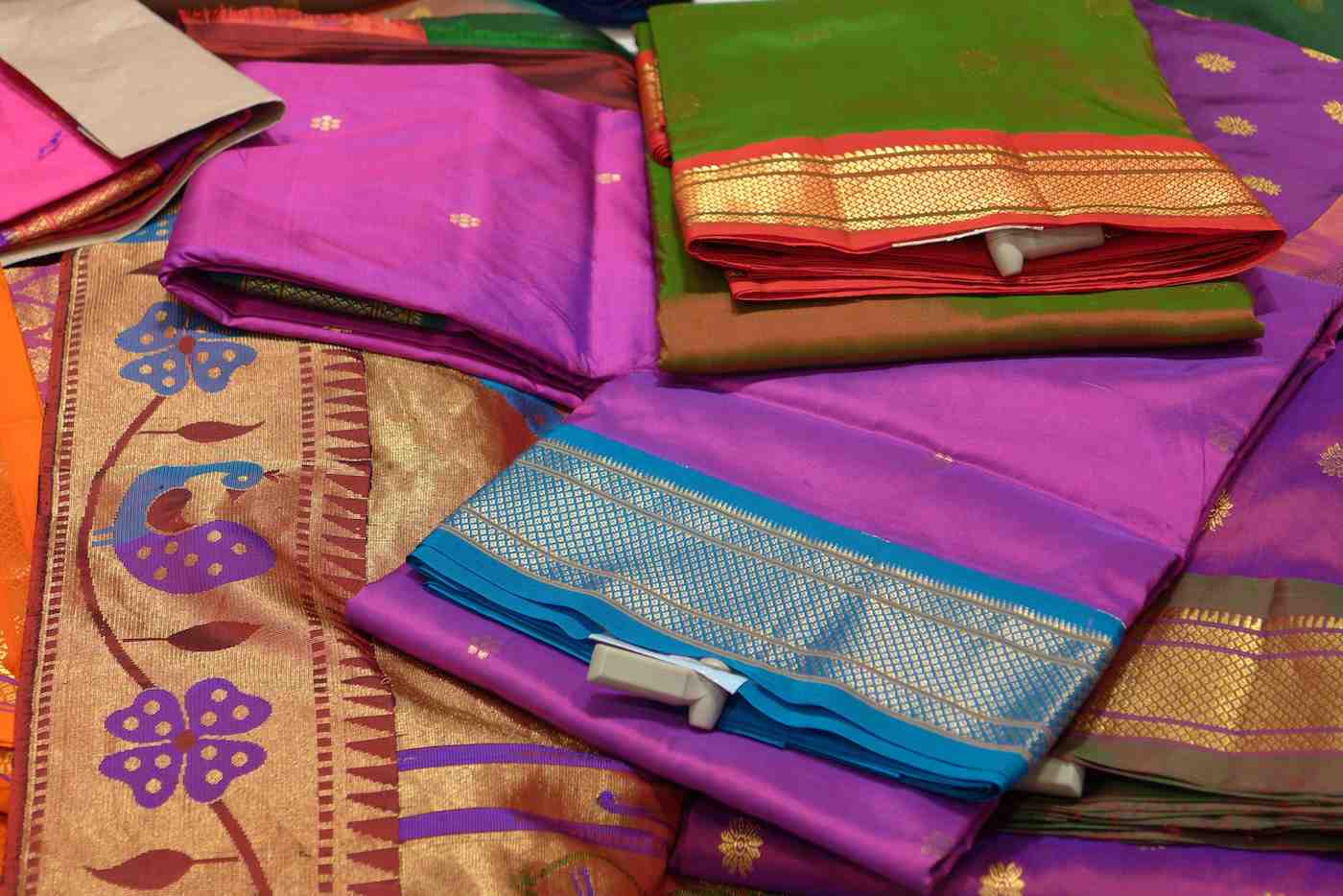
More handwoven silk sarees, all iridescent and finely embroidered. Peacocks and flowers are popular motifs.
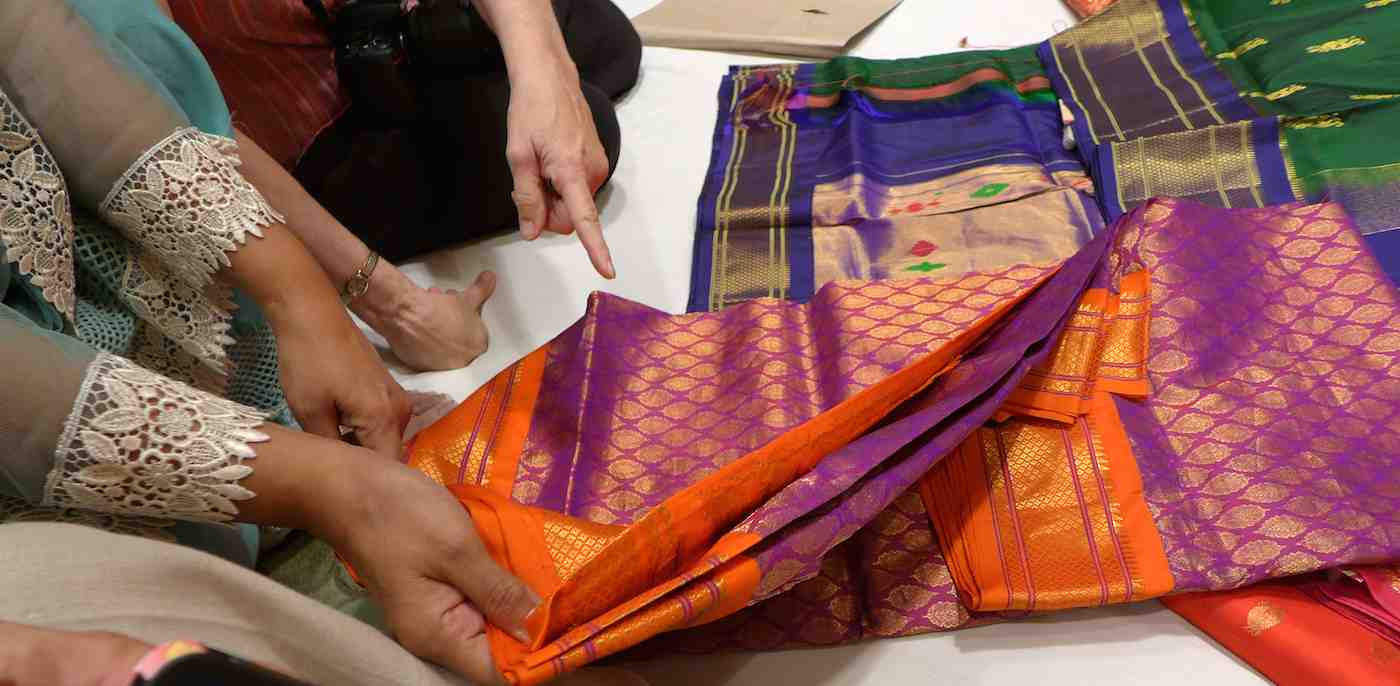
Very hard to choose. I think this one made the cut.
A few days later, we went to the seamstress to be measured so our blouses could be stitched. We were handed pattern catalogs to choose the style we wanted:
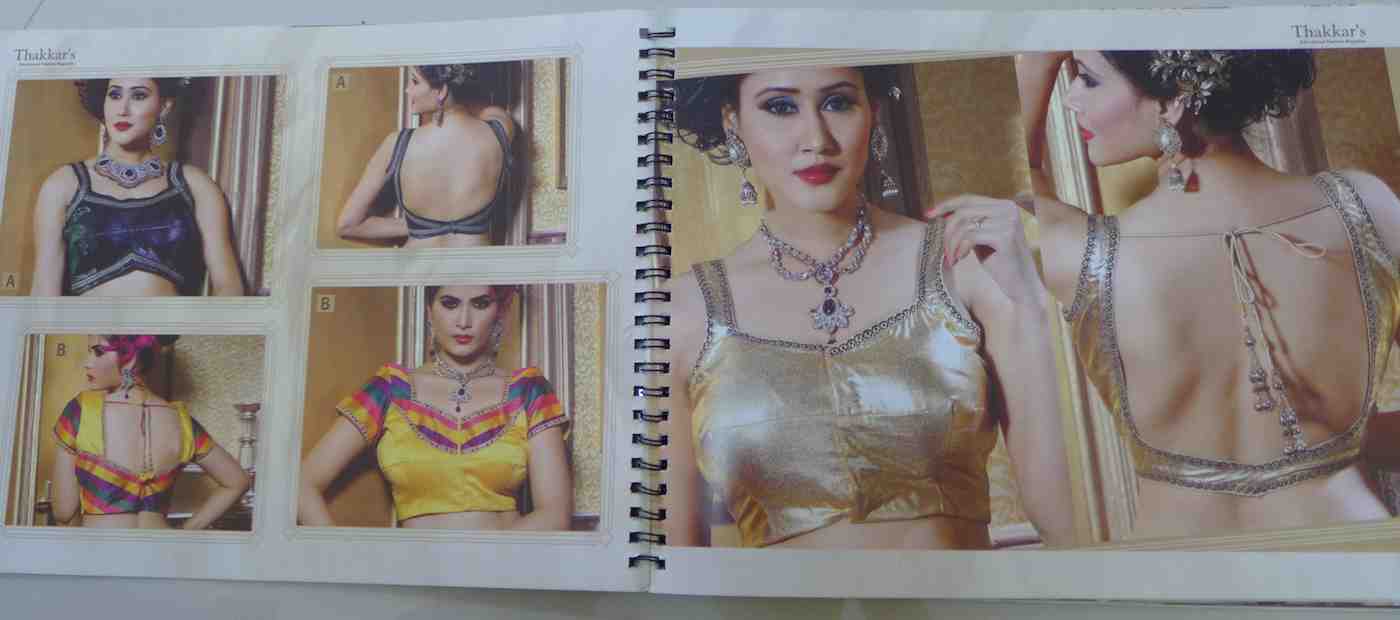
Pattern catalog for saree blouses.
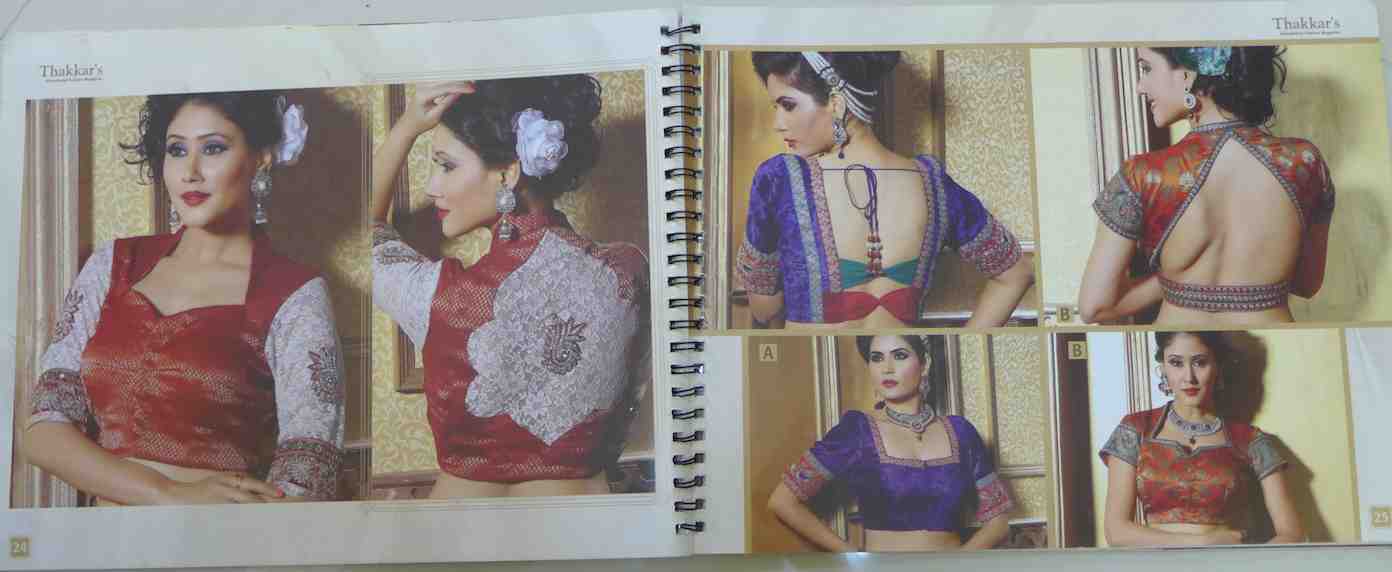
More blouse patterns.
Most of us older guests wanted the longest blouse with the most coverage possible. It took some looking, and we only had a couple days for many blouses to be stitched so we were urged to choose simpler designs (which was fine by us).
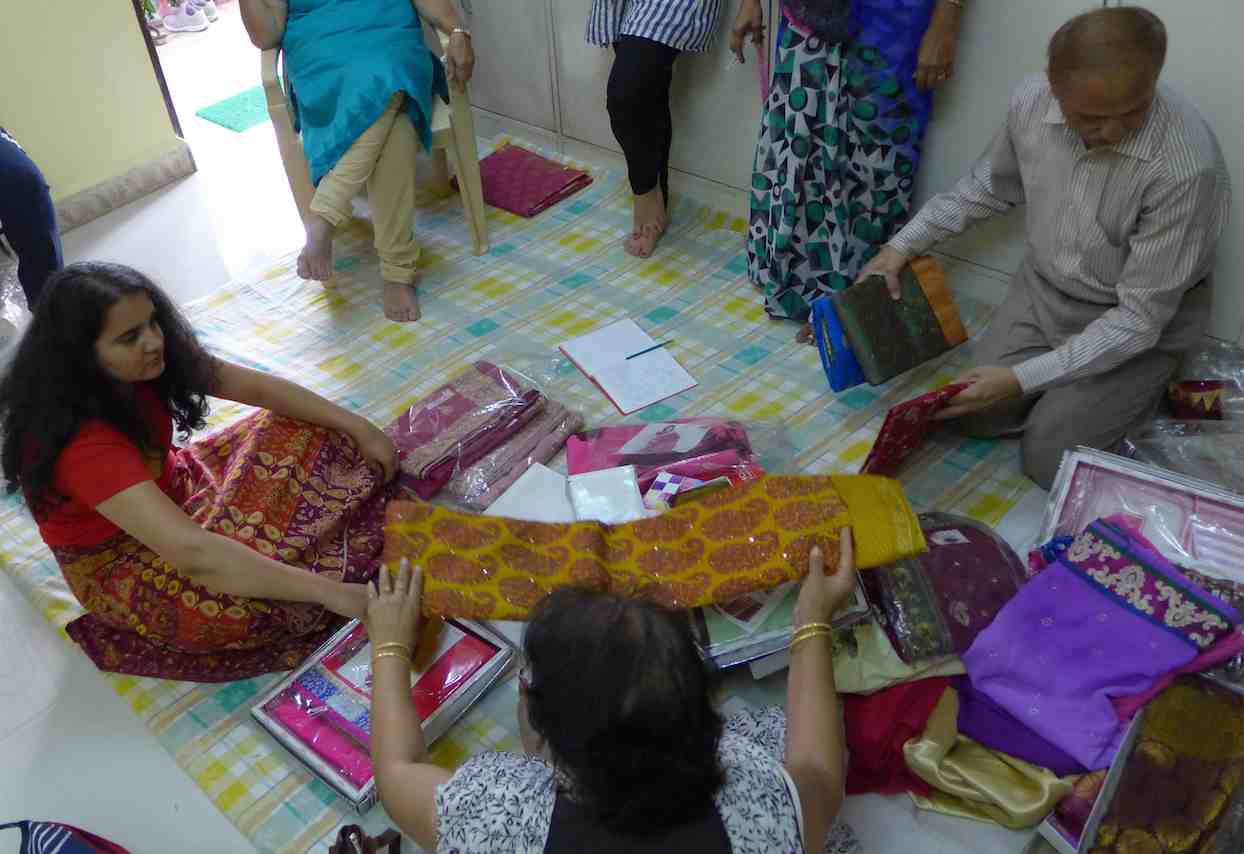
At the seamstress, looking at sarees before measurements were taken.
A day or two before the wedding we tried on our blouses, but we didn’t get to try on our full ensembles until the wedding day. Saree wrapping is a little complicated and there are many styles, but thankfully some of the female relatives volunteered to help get us USians dressed.
Though the positioning of the pallu is critical to the look it was explained to me that the pleats in the front were the most important part–the most difficult to fold and also the hardest to maintain all day. I was admonished to tie my petticoat very tight so the pleats would stay tucked in. During the day I kept hitching them up so I wouldn’t walk on them, and various female Indian family members would stop to pull them down. You wear these things right down to the floor–no ankles allowed–and have to be mindful to lift the pleats when you go up and down stairs so you don’t step on and unravel them.
And yes, it’s fair play to use safety pins. I am told Indian women use them too.
Unfortunately Samuel wasn’t around to film my wrapping process and I couldn’t call him (don’t even get me started about the multiple SIM card comedies that beset our group all through the wedding week) but if you want to see how complex it is to properly wrap a saree, this video may give you a clue:
I know you’re dying to see the final result. Here it is:
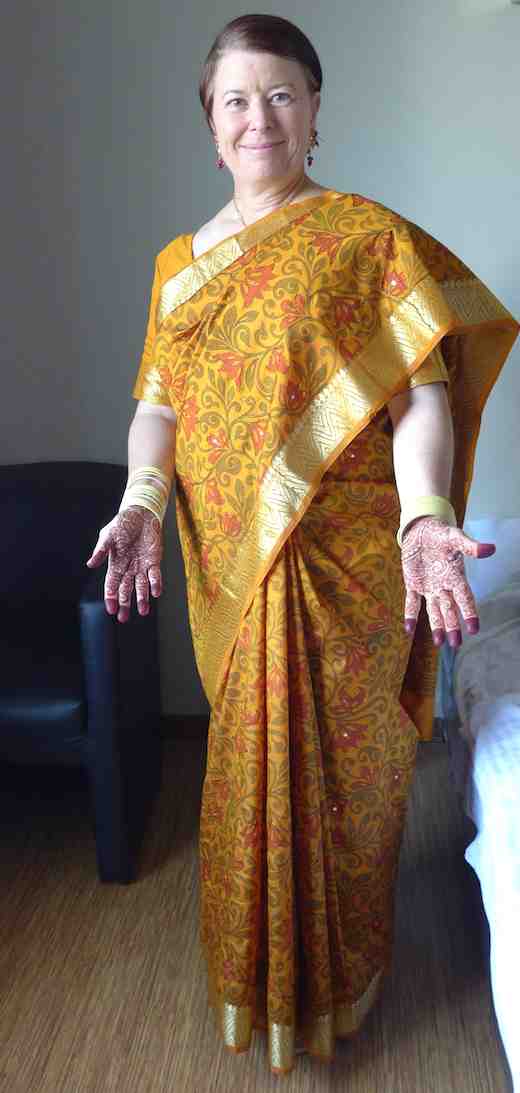
Pleats, pallu, mehndi, bindi.
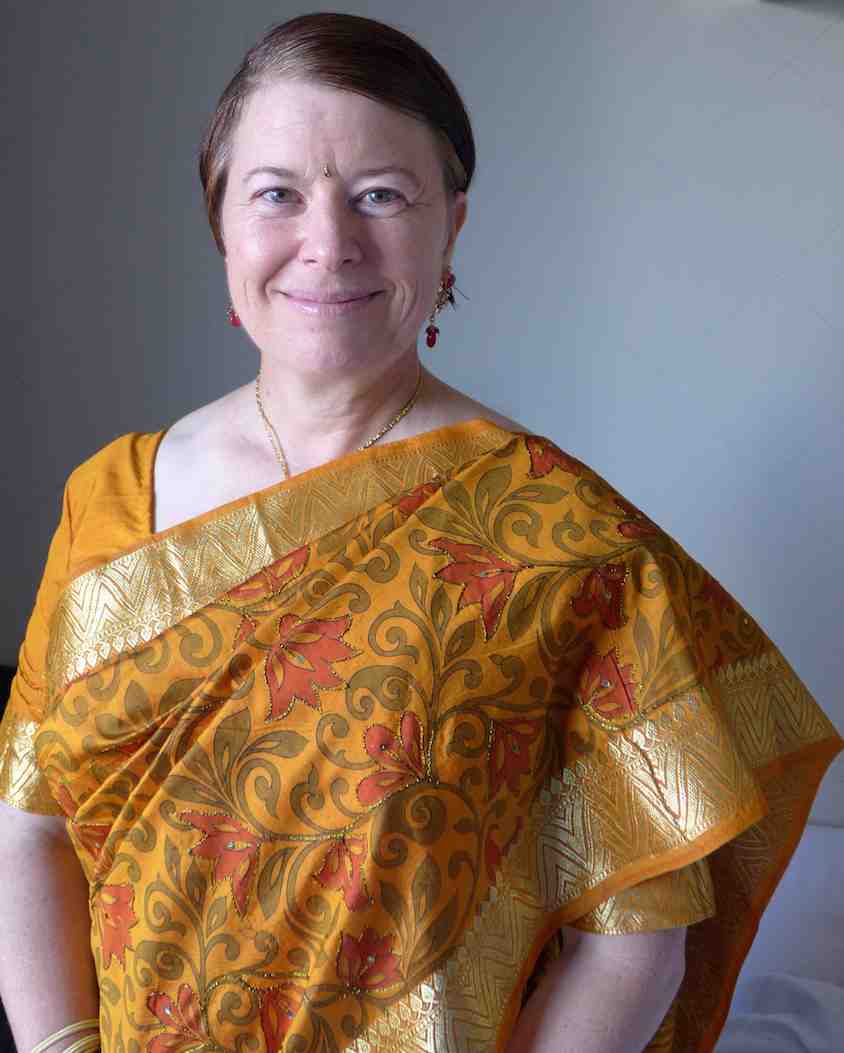
Me and my pallu.
Thankfully it seemed we were all well wrapped, as none of us had a dreaded wardrobe malfunction during the event. All the members of the American contingent were to take a turn at a “ramp walk” to show off our clothing at the post-wedding reception and talent show, and thanks to the excellent taste of the bride and the bride’s mom–and their monster mad shopping skillz–we were greeted with hearty applause.
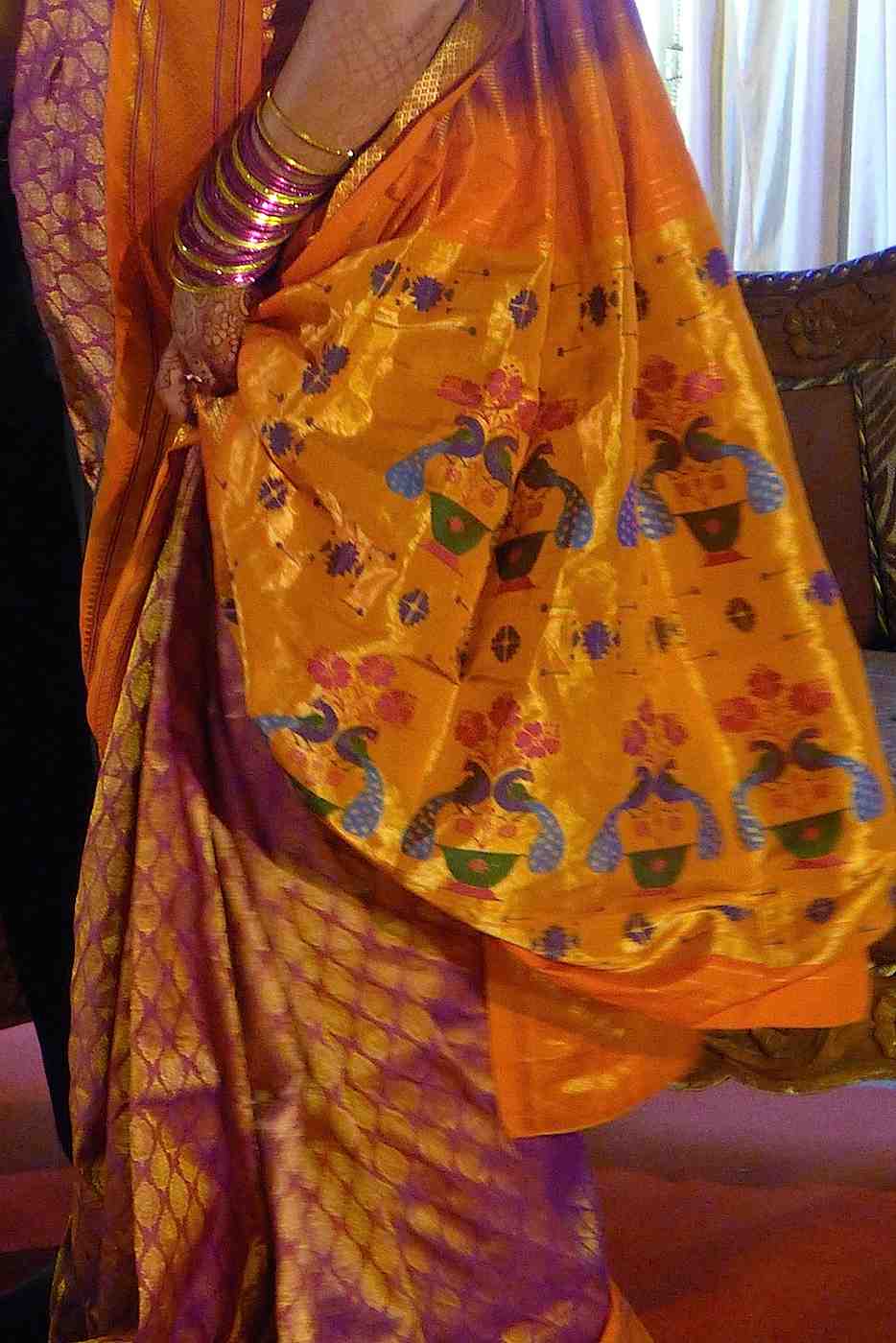
The bride’s handwoven silk saree at the evening reception, plus bangles.