I remember where I was when I first heard about Hurricane Katrina and the flooding of New Orleans — I was returning from hiking in the Slovenian Dolomites, and the poorly translated news came to us in the last days of the trip: something bad had happened to an American city. The news filled in gradually — we learned it was a natural disaster, not a terrorist attack, and we learned it was in New Orleans. By the time we were at the airport heading back to the US, the story on CNN was about the collapse of civil order. The full magnitude was shocking.
Today, nearly five years later, it’s more shocking yet.
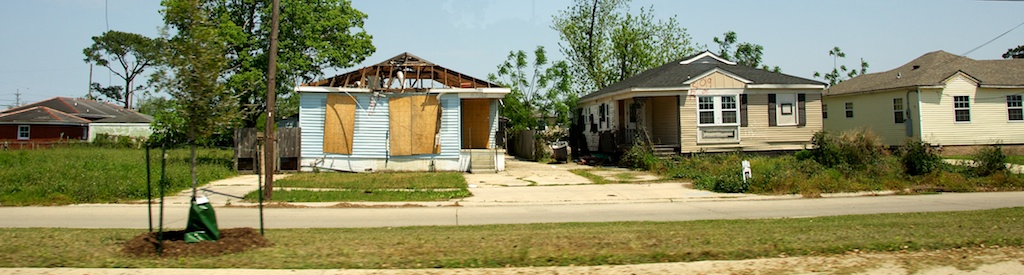
Torn down and gone, boarded up, or still being repaired
I don’t think I ever had even factual understanding of the extent of the disaster Katrina visited upon the city. I knew certain parts of the story. I had seen pictures, heard people telling what they’d seen, heard about their volunteer experiences. Somehow, though, because the picaresque French Quarter and Garden District were spared, and despite the news stories of the tremendous chaos, operational bungling, and political failures, somehow in my mind, the narrative was all about the Lower Ninth Ward.
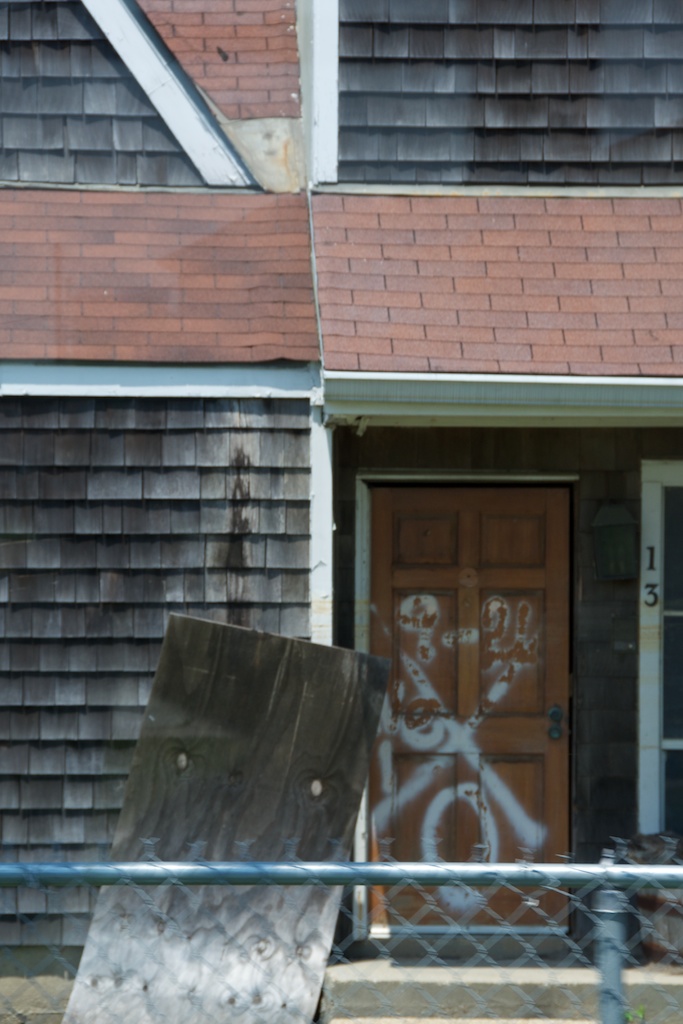
Condemned House, Marked as Searched
Our first full day in New Orleans, we went on a three hour driving tour through the city, focusing on Katrina and the aftermath. Statistics like “80% of the city was flooded” and “12 feet of standing water” take on a tremendous visceral quality when you can see it. It’s almost five years later, and outside of the two places already mentioned, there is no part of the city without ample signs of what happened. It’s staggering. It’s overwhelming. It’s far beyond my ability to describe.
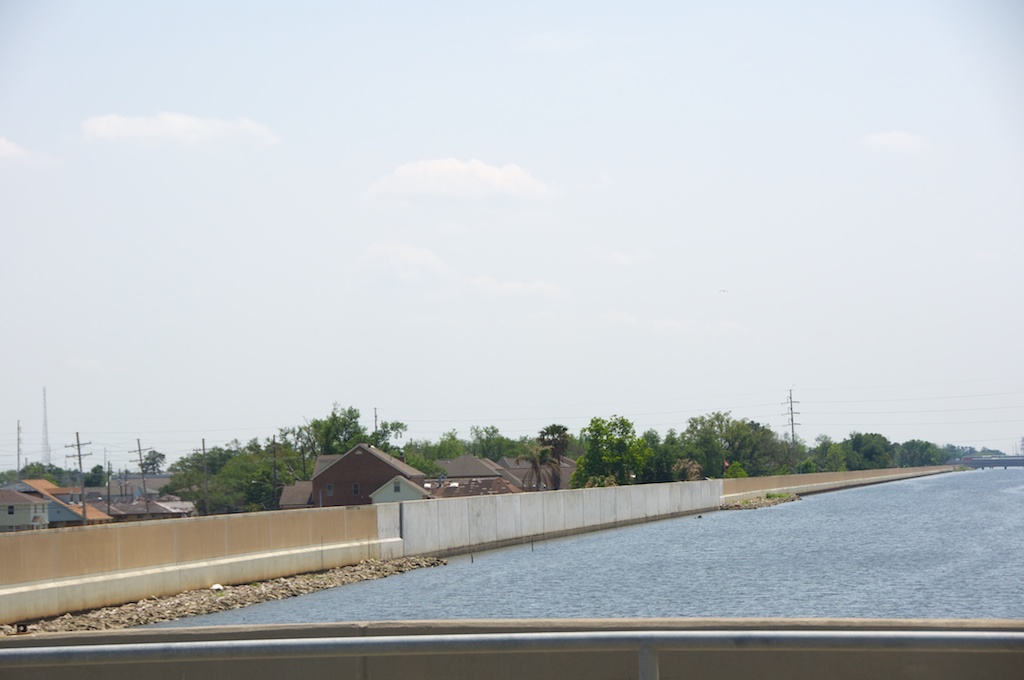
Repaired flood wall, 17th Street Canal
When thinking about disasters, my personal point of reference is the Los Angeles experience of earthquakes, fires, and the ’92 riots. Somewhere in the back of my mind, I think of the effects of disasters as being slightly worse or slightly better than what I’ve seen. This thinking completely falls apart in the face of surveying the vast swaths of New Orleans that were under 12 feet of water for days or even weeks.
Not to minimize the pain and destruction of the disasters that have gone through Los Angeles, but the sheer scope just can’t be compared. Percentage-wise, the equivalent would require over eleven million people to evacuate LA County within a week, with nearly three million of them never returning. Nearly four million housing units would have to suffer damage, and half of those would have to be condemned and demolished. And this is just the physical disaster, and leaves out all of the governmental, funding, and rebuilding crises that follow.
…
New Orleans has been vigorously rebuilding (at least the wealthier areas) since the waters have receded. An estimated seventy percent of the population has returned. Some businesses have returned; others haven’t. Even on weeknights, the touristy areas (like the French Quarter) are hopping with revelers and the restaurants and bars are crowded. The convention center is reportedly fully booked.
Sometimes, the community spirit of the city seems palpable; civic pride runs deep.
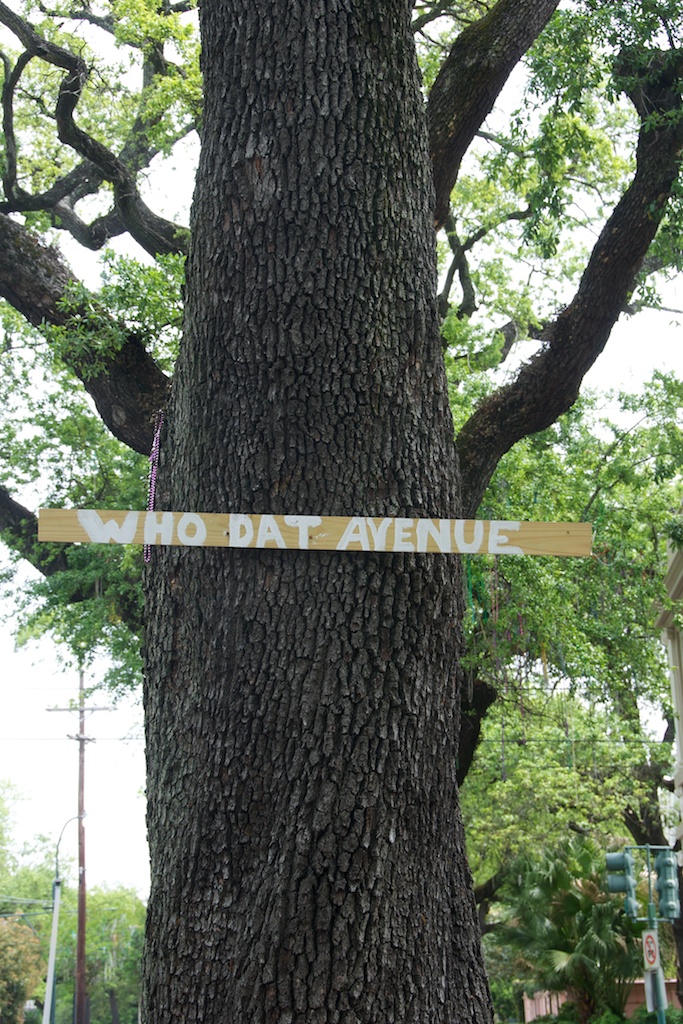
Saints fans are everywhere!
Other times, you can see the strain on people’s faces — they’ve been through a lot (and for many of them, that’s in addition to Katrina). There have been promises made and broken, there has been corruption, there have been lots of false hopes dangled and then snatched away.
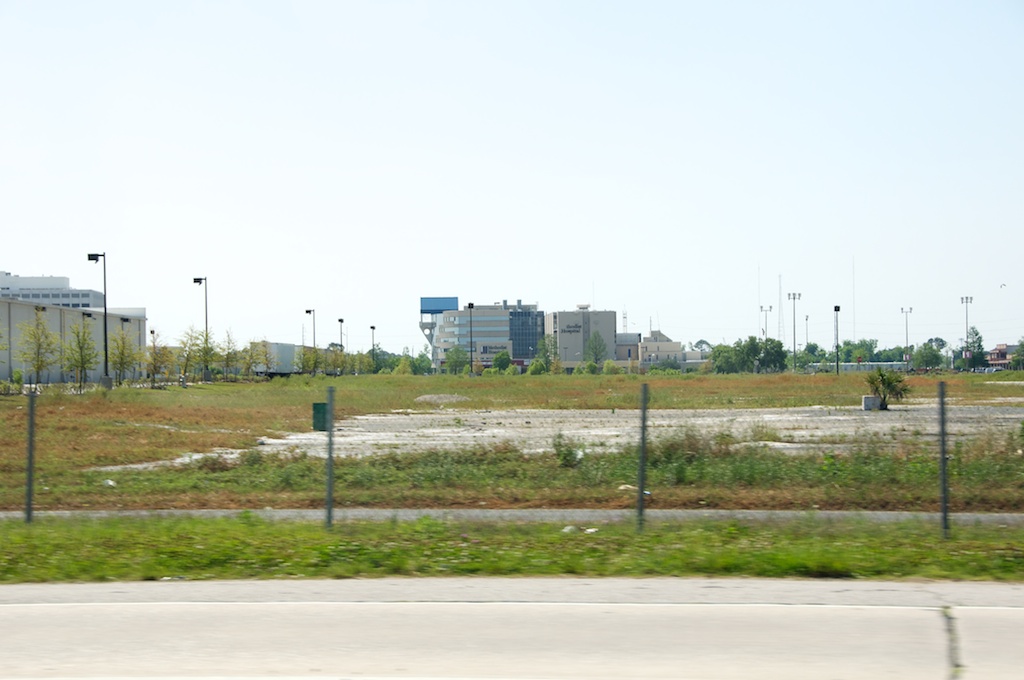
Some businesses won't come back
It’s not clear what the future holds. Severe problems persist in housing, government, and social services. The fundamental threat of future levy failures has not been resolved.
Still, after even a brief visit, you can’t help but root for New Orleans. Who Dat!
(A variety of sources, of varying reliability, were used here, including personal experience, tour guide statements, the Greater New Orleans Community Data Center, Wikipedia, and NOLA.com)