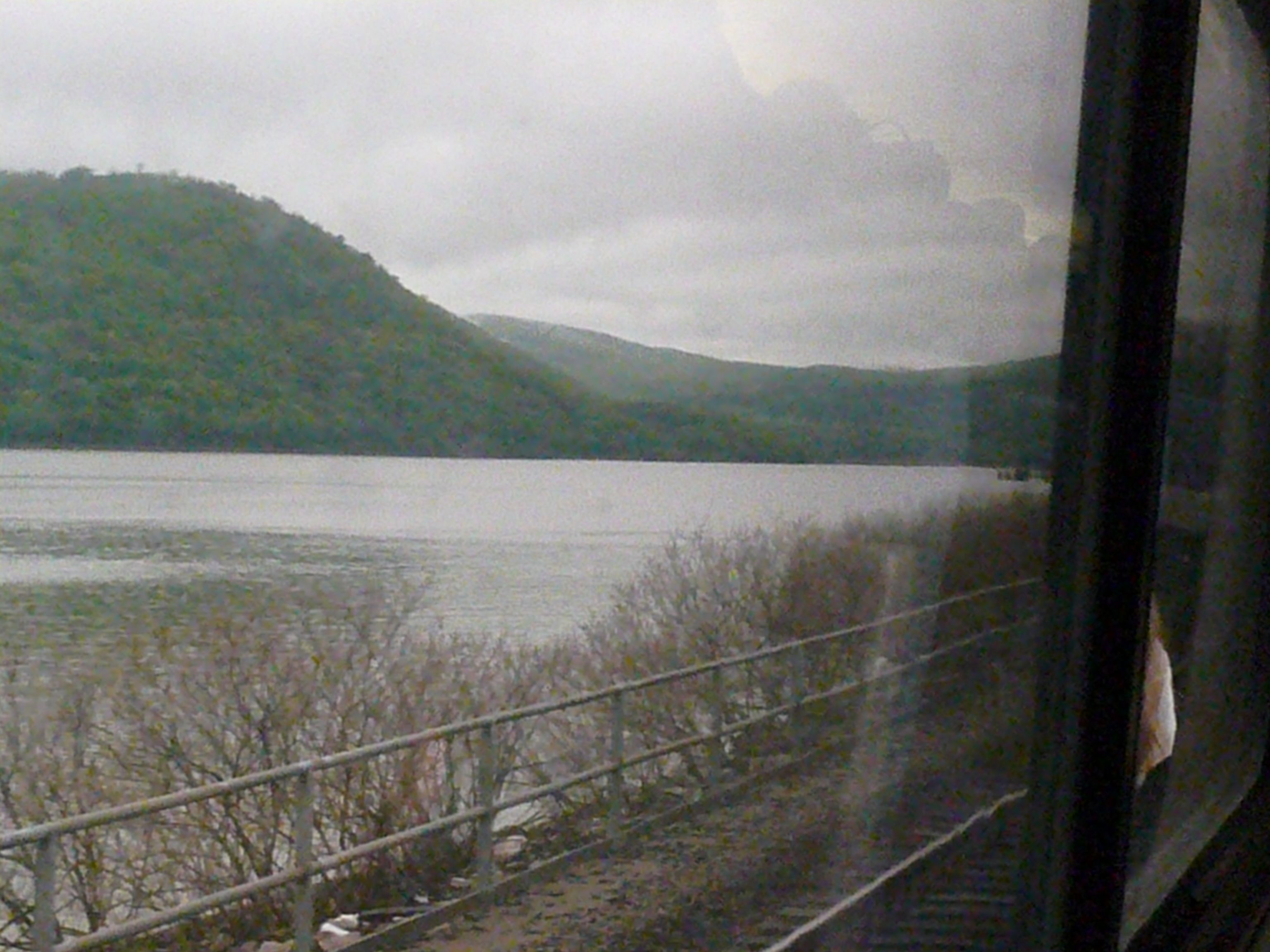
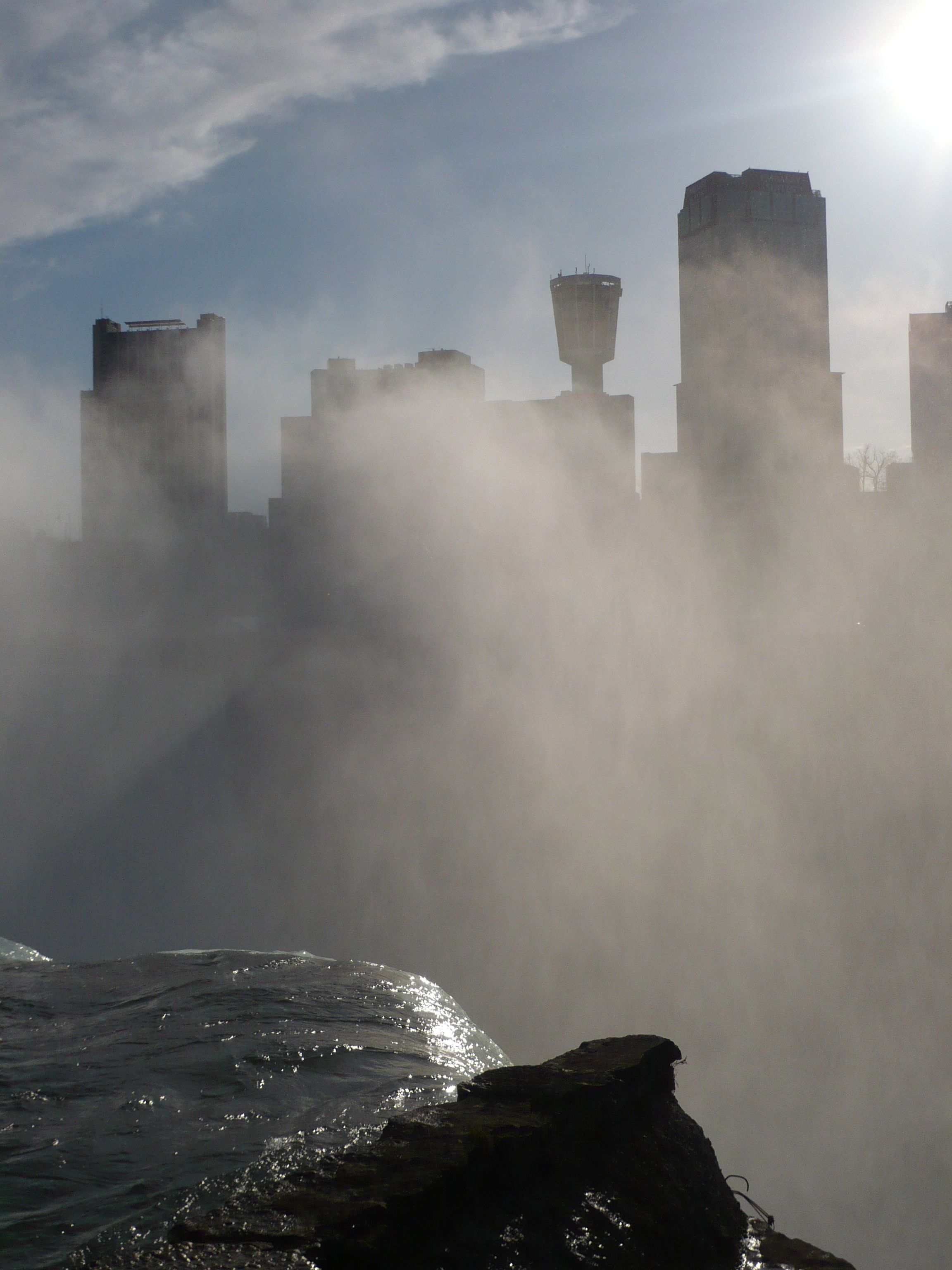
After our sleepless night in Philly we boarded an early train and went up the gorgeous Hudson Valley to Niagara Falls, which I was shocked to find lacked the quaint honeymoon cottages and culture I had been led to expect by recent puff pieces in the national press. In fact, we were doubly shocked to see how much of the town was derelict–empty storefronts and huge malls, empty.
In contrast, the Canadian side looked like Las Vegas and was thrumming with tourist activity.
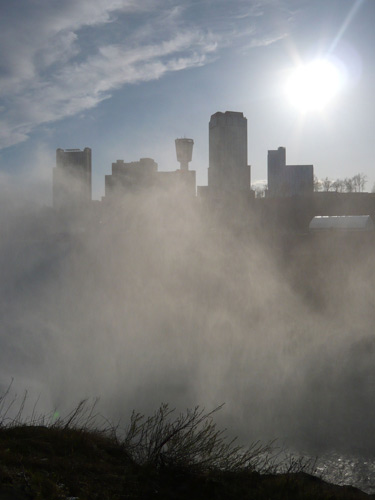
Made Of The Mist? The Canadian Side Beckons
We had a good time bumming around in spite of this–the Falls and the park were still beautiful though overcast–we did finally see a rainbow over Niagara in our last hour before leaving.
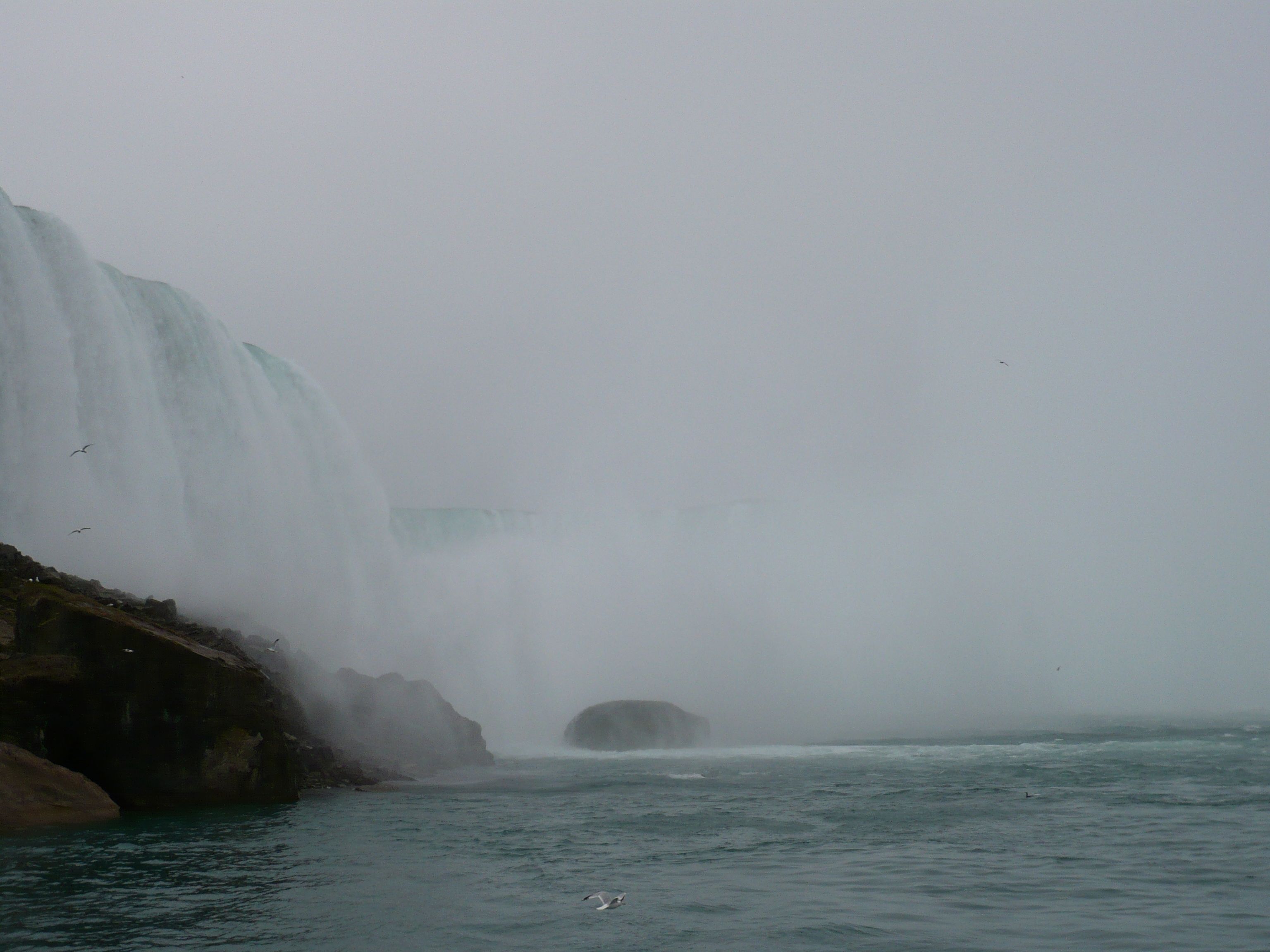
Touching Water , North Border-View from the deck of The Maid of The Mist (four of the five Great Lakes contribute water to Niagara Falls)
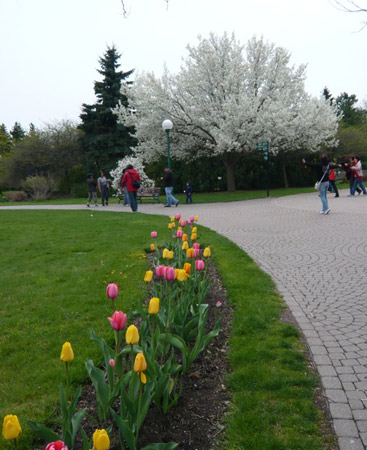
Great Lakes Garden, Niagara State Park
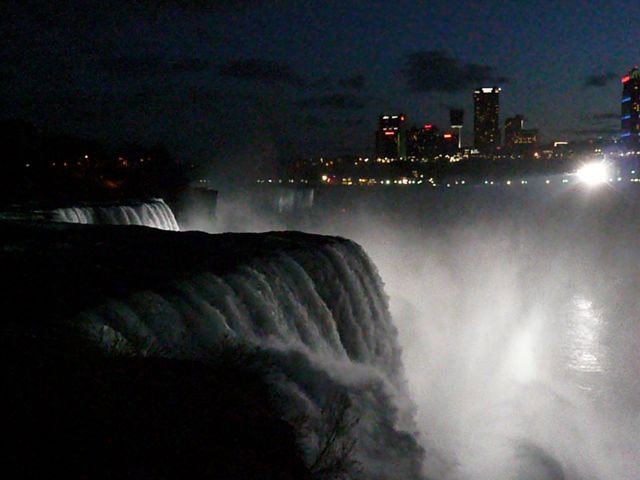
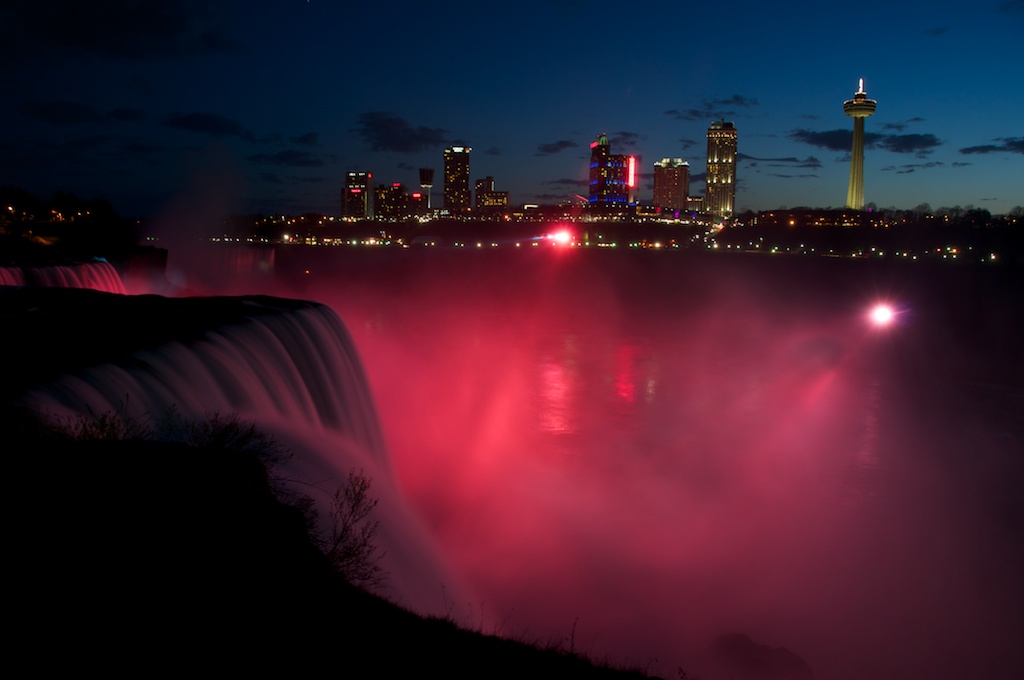
Illuminated Falls At Night
I spoke with a few locals and wrote my first Examiner piece on the town; I ended up discovering a lot more about the region with just a few conversations than I thought I would. Niagara is experiencing some complex political and economic issues right now, and its survival depends on either a radically improved economy right away or some smart, rapid action on behalf of the state and local authorities, neither of which seems forthcoming. It’s sad–there’s a lot to enjoy there, potential wasted mostly by political in-fighting.
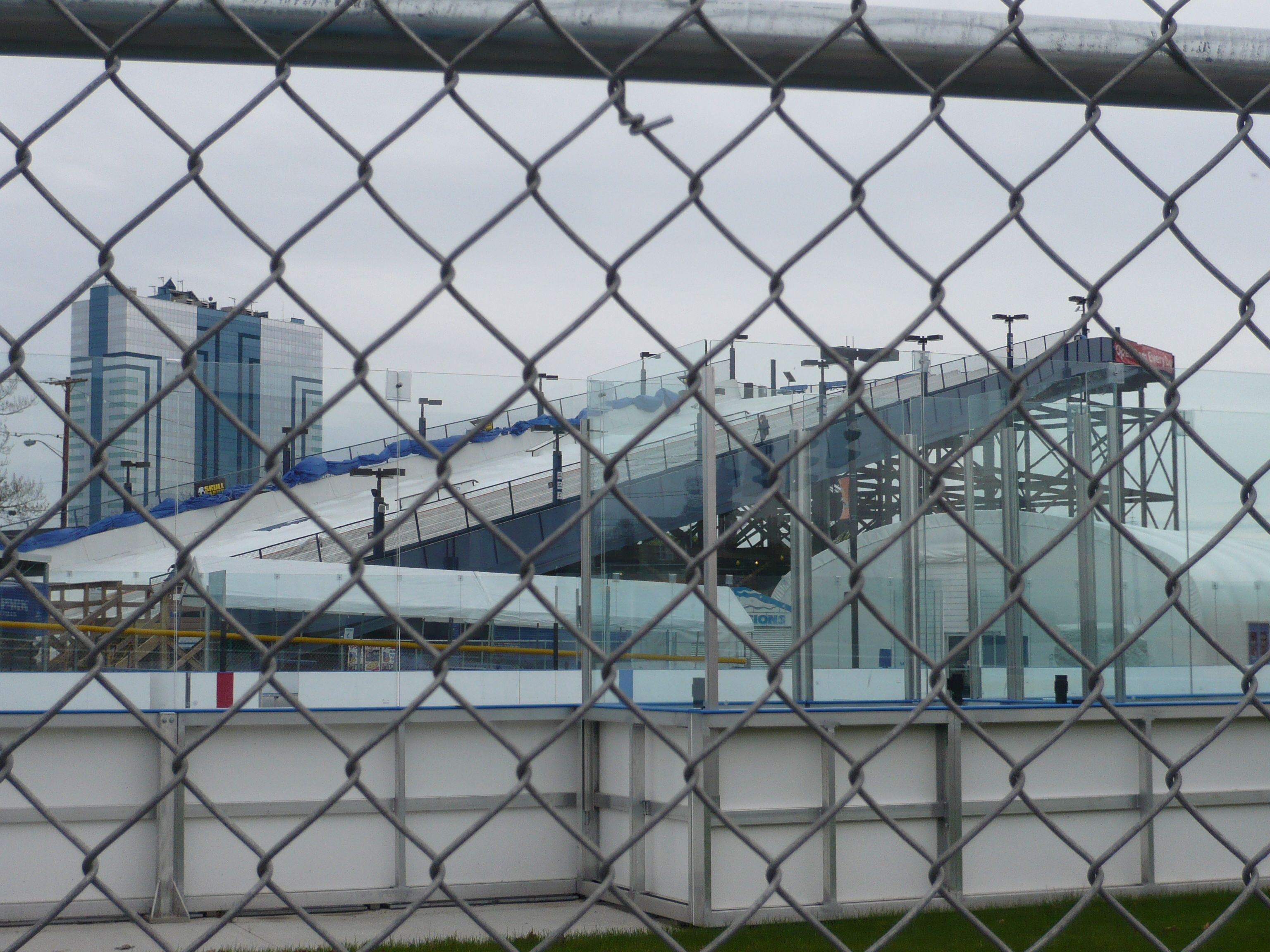
Sad Empty "Snow Park," Niagara Falls
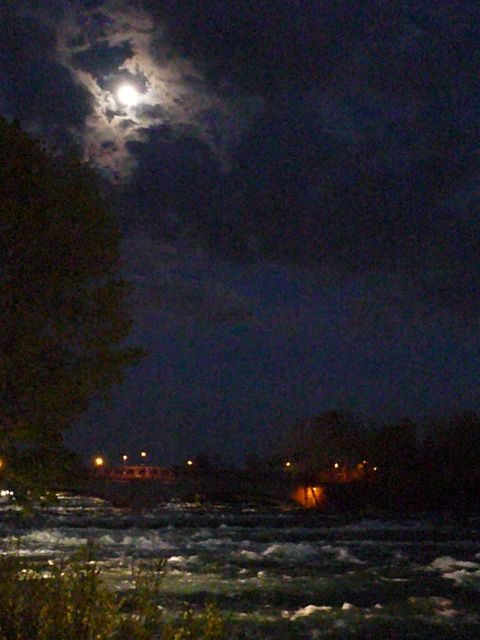
Full Moon Over The Niagara Rapids, Near The Red Coach Inn
We stayed at the Red Coach Inn, a last-renovated-in-the-1950’s red-velvet funky theme joint–a little dusty, but the staff was friendly and they had an old school menu in the restaurant, e.g. steaks served with a pat of butter on top. You could hear the Niagara rapids from our room, which was really nice, sound like steady rain.
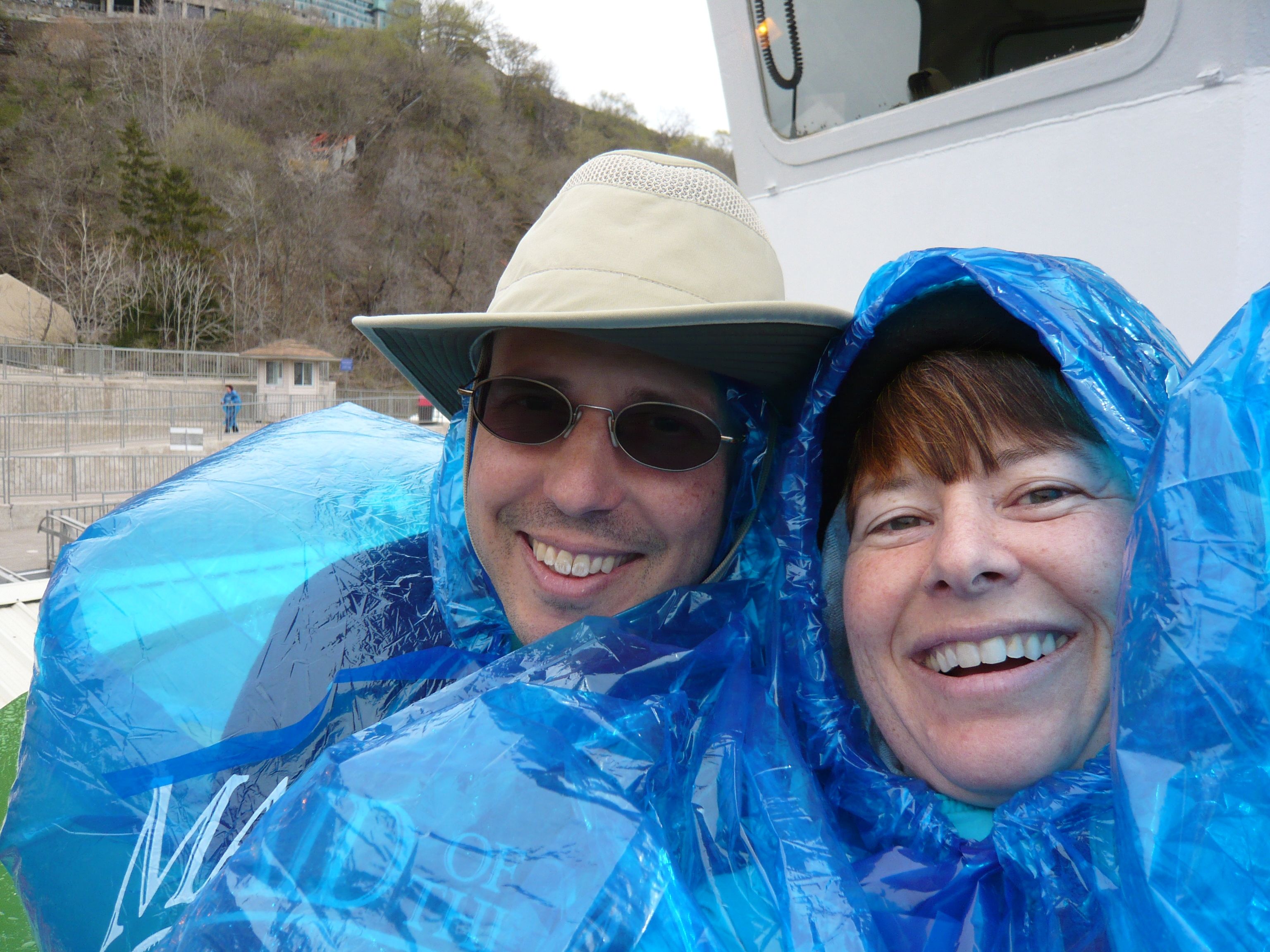
Modeling "Maid Of The Mist" Blue Ponchos
We did the Maid of the Mist and walked the Falls Park; on our last day, we visited with the Niagara area jeweler that made my wedding band (I’m working on an Examiner piece about him and his work) and he was hilarious and really fun to talk to, but we had to dash to make our next train.
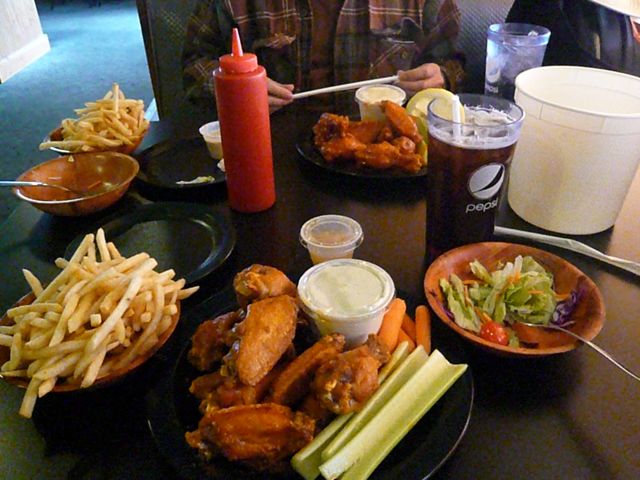
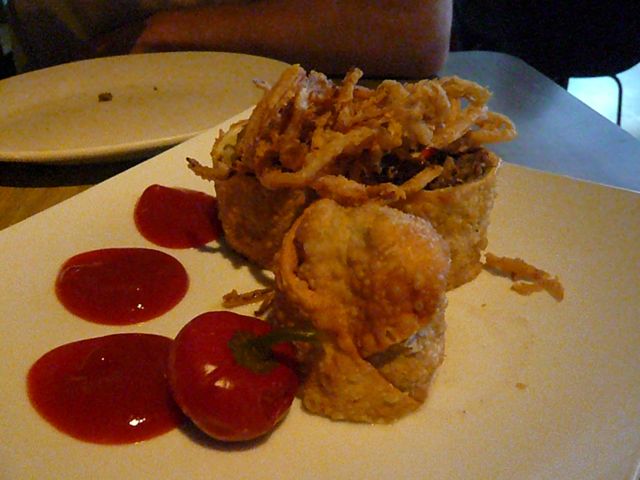
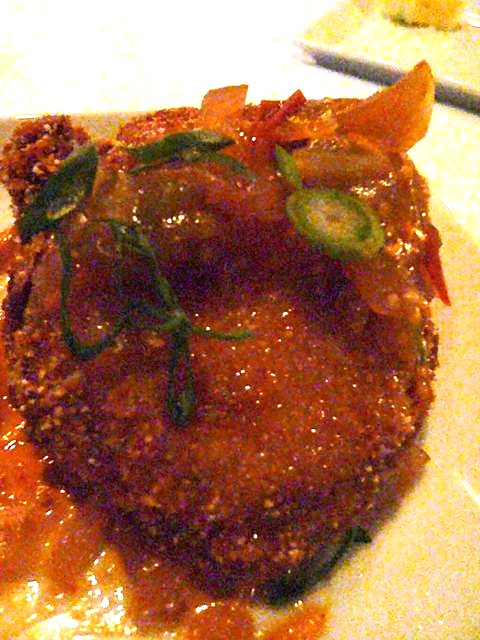
Buffalo Wings At Duff's--Buffalo, NY
We had to change trains and kill about ten hours in Buffalo, which was FREAKIN’ COLD!! We walked around and a) ate authentic Buffalo wings at purportedly-top-rated-wing-joint Duff’s, which were spicy, greasy, and made us slightly nauseated, and b) found the coolest grocery store on the planet, Wegman’s–better stocked with fresh-prepped, interesting food than Bristol Farms or Whole Paycheck, with FREE WIRELESS IN THEIR CAFE!!! We ate lunch like, three times during the five hours we were there, stocked up on snacks for the train, internetted, and then went back to the Amtrak station to set off for Milwaukee and points west.
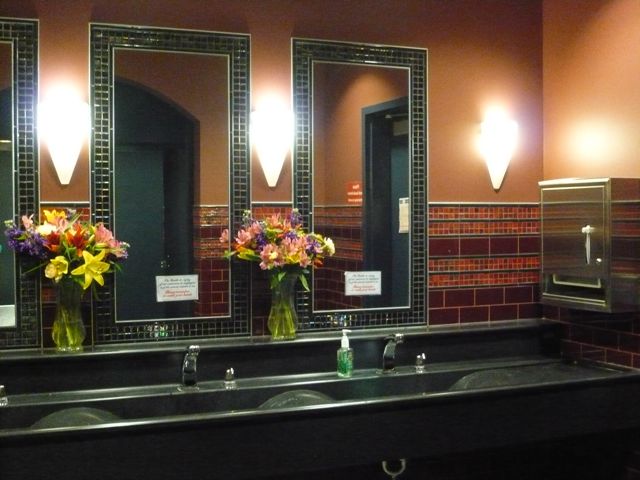
I mean, they had FRESH FLOWERS in the RESTROOM! WEGMAN'S ROCKS!!!
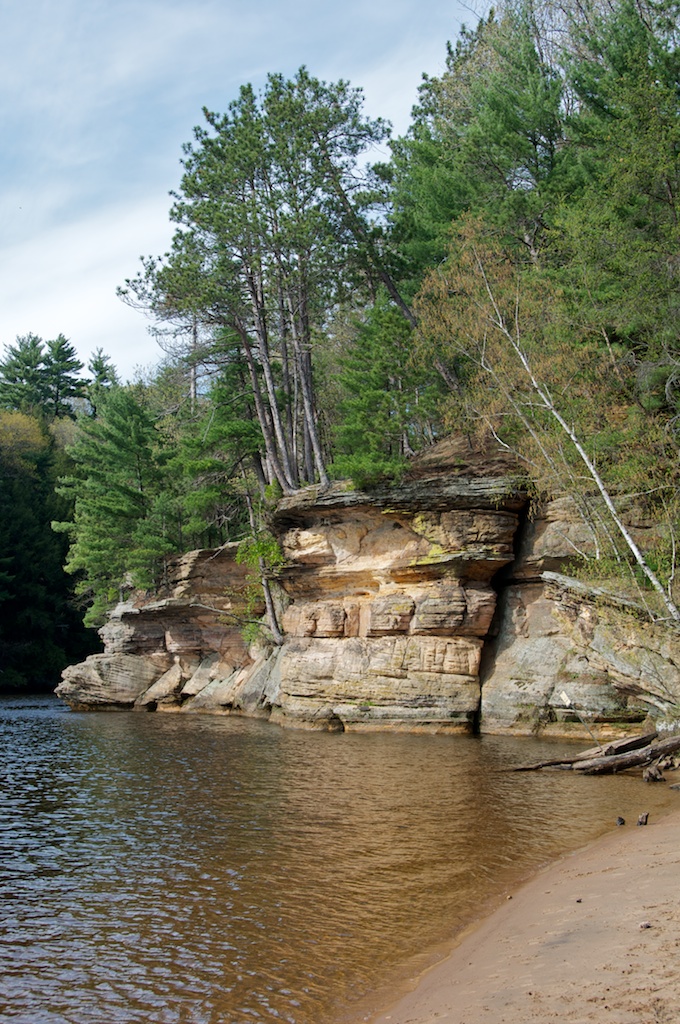
We rented a car and drove from Milwaukee through, YES–WAUKESHA, WISCONSIN!!! HOME OF SPIDERCOW!!! on our way to Baraboo, WI. We made good time so we drove over to the Dells, which we had been told were “really beautiful.” They were “really” piled high with Vegas-style waterparks and amusement complexes and moose-and-bear themed restaurants, though we did take a nice hike to the water through the woods only to encounter teens talking on their cell phones and some guy with his boat radio cranked up. Ah, the sweet sounds of nature.
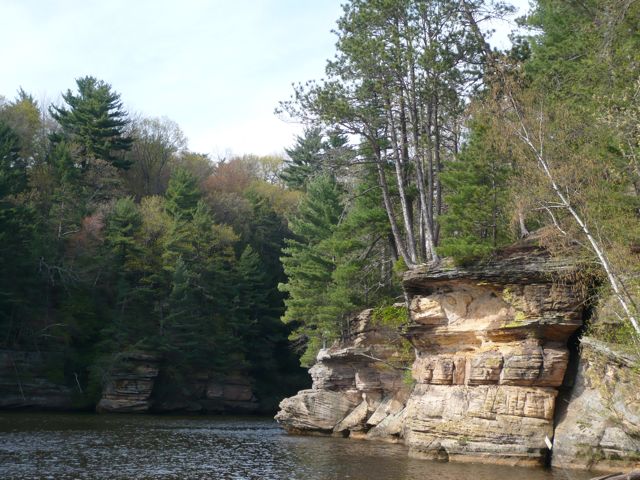
The Dells
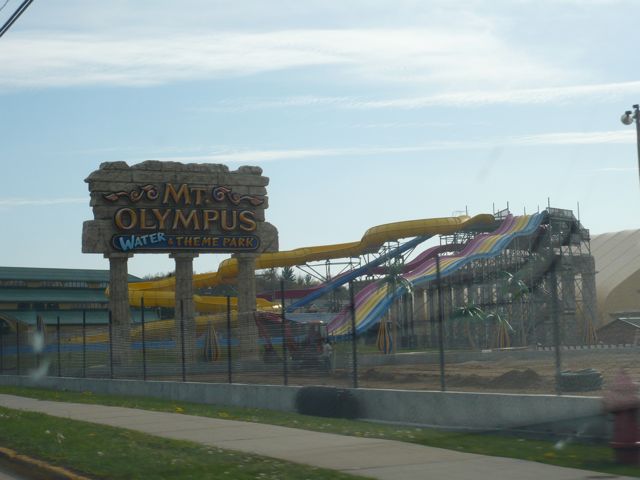
The Dells
At Baraboo we stayed at another funky inn run by a funny retired couple–birdhouses that were little models of the inn and crazy cut-out cows everywhere–but we were skunked by the non-open Circus World, to which we had expressly traveled to Baraboo to see. Our best guess was that we had obtained their schedule from an old website–there was a newly renovated one when we checked again, and this one said they weren’t going to open until May 22nd. But we were already there. Bara-BOOOOOO.
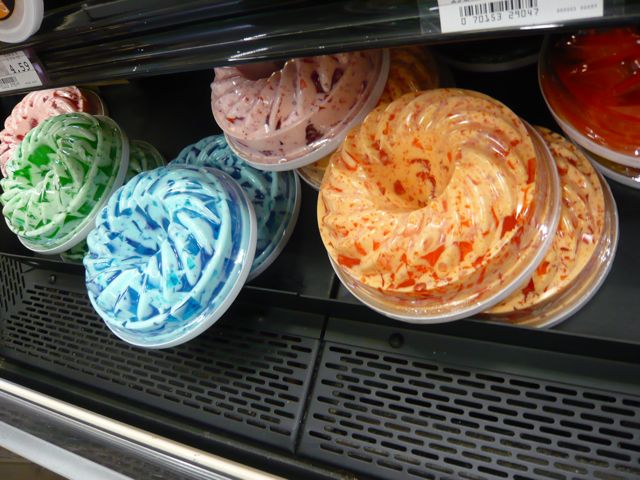
You Know You're In Wisconsin When You See These Next To The Cheese
We went instead and picnicked here at Devil’s Lake–not very circusy but we made do. There were turtles.
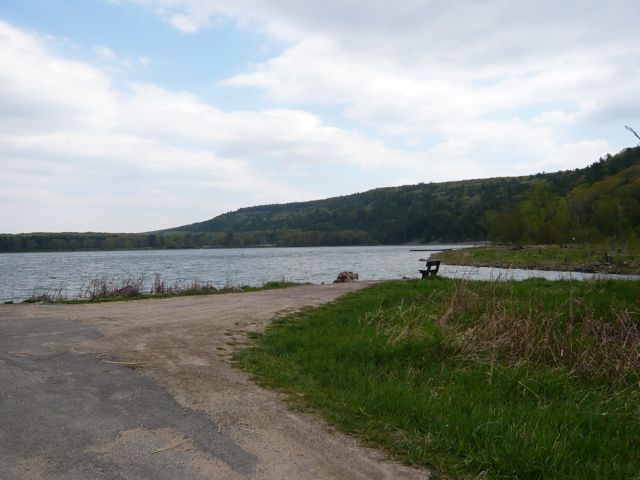
Our Picnic Bench, Devil's Lake, WI
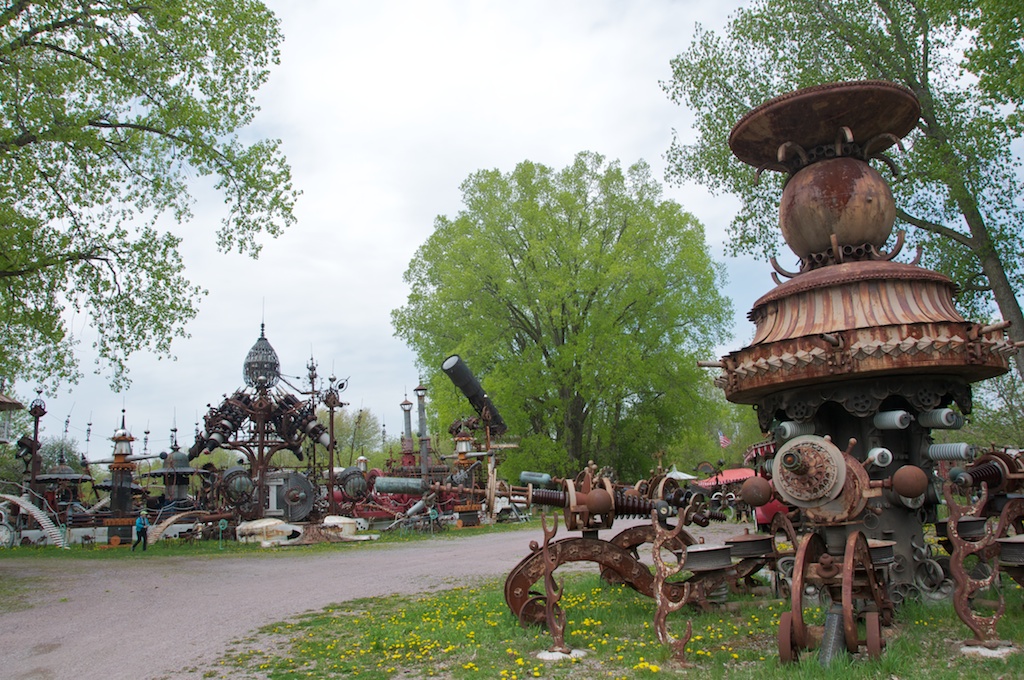
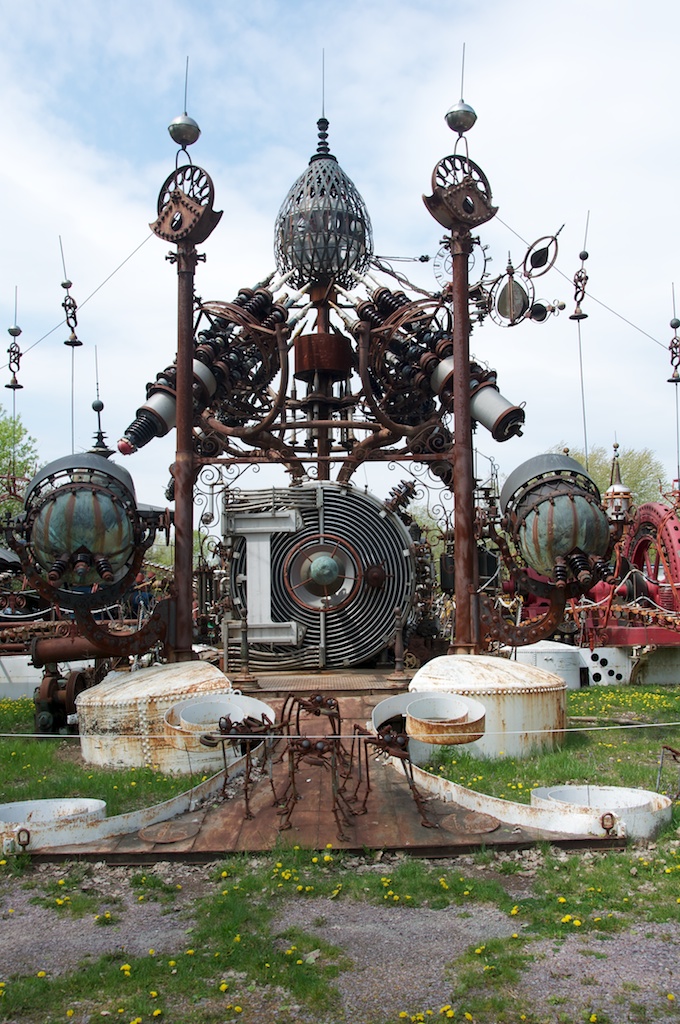
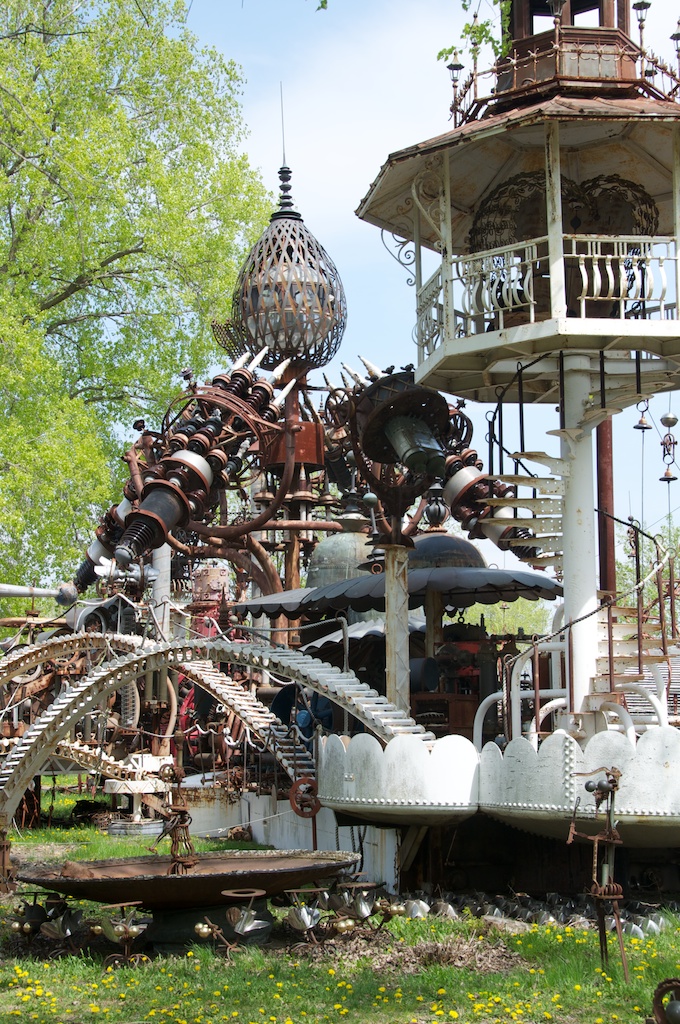
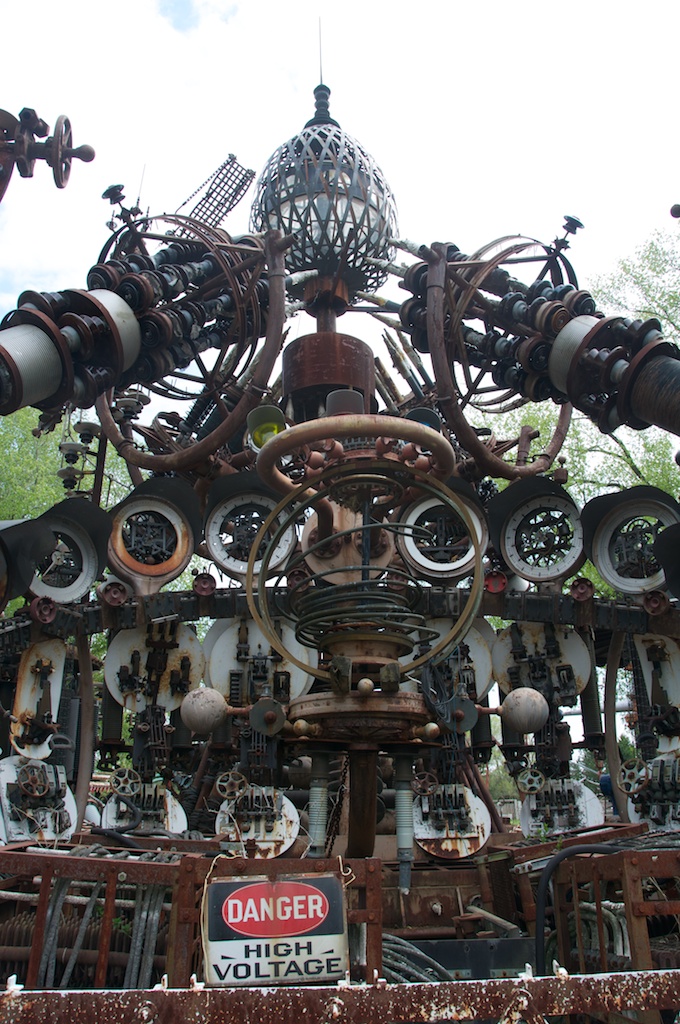
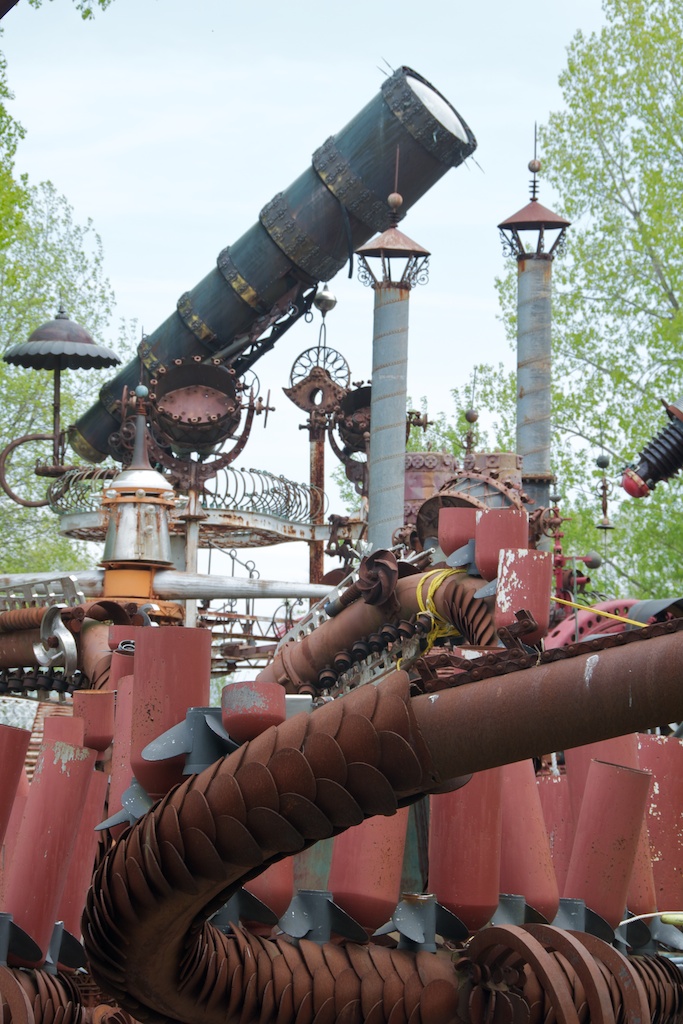
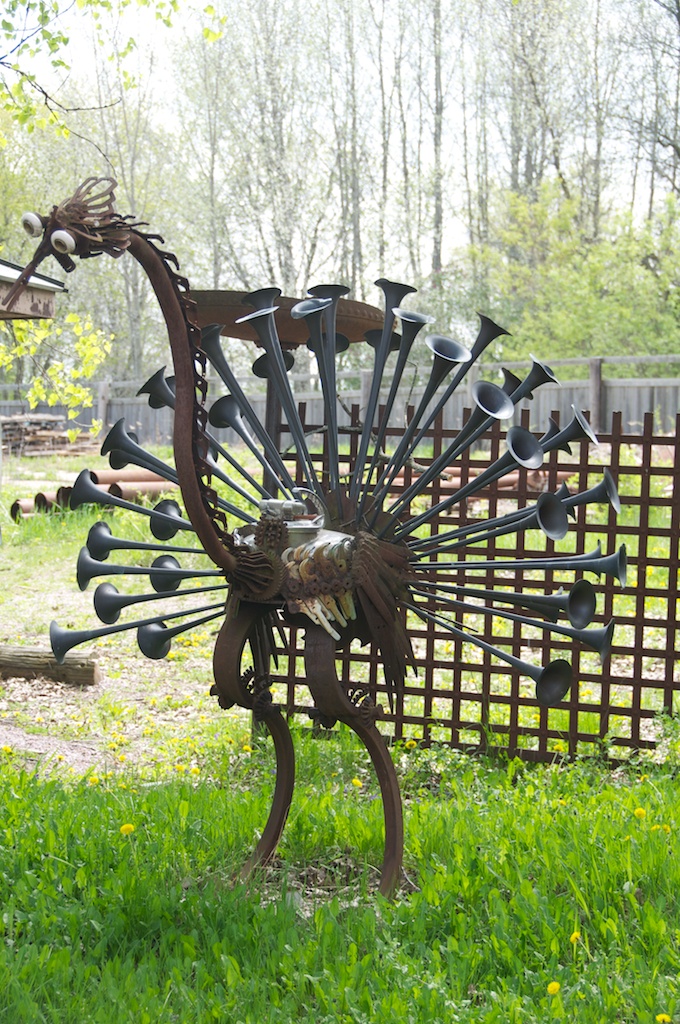
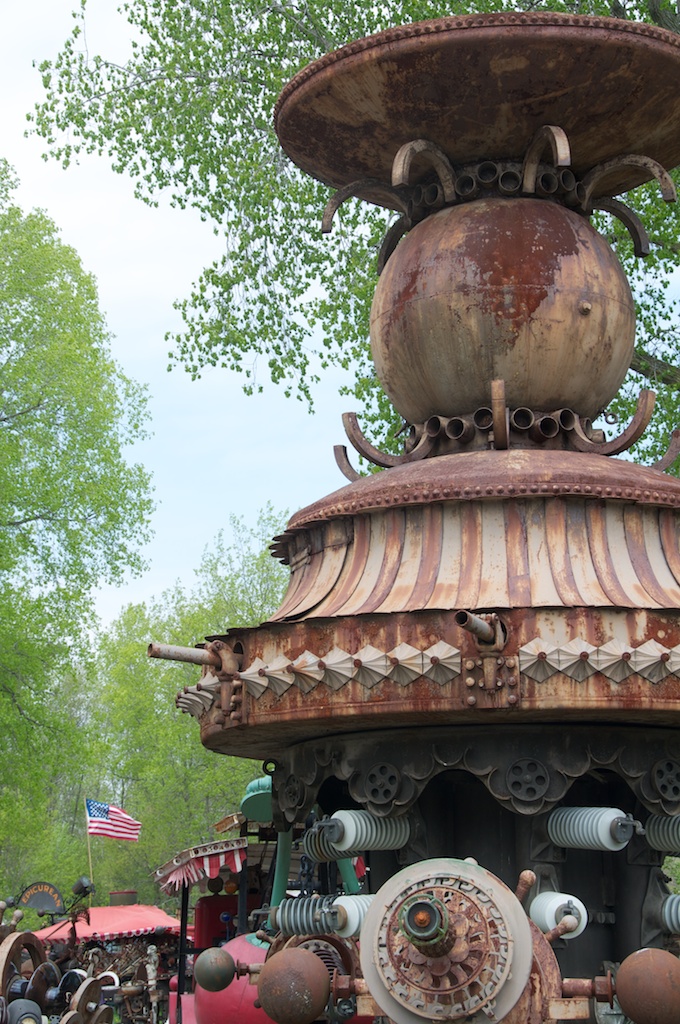
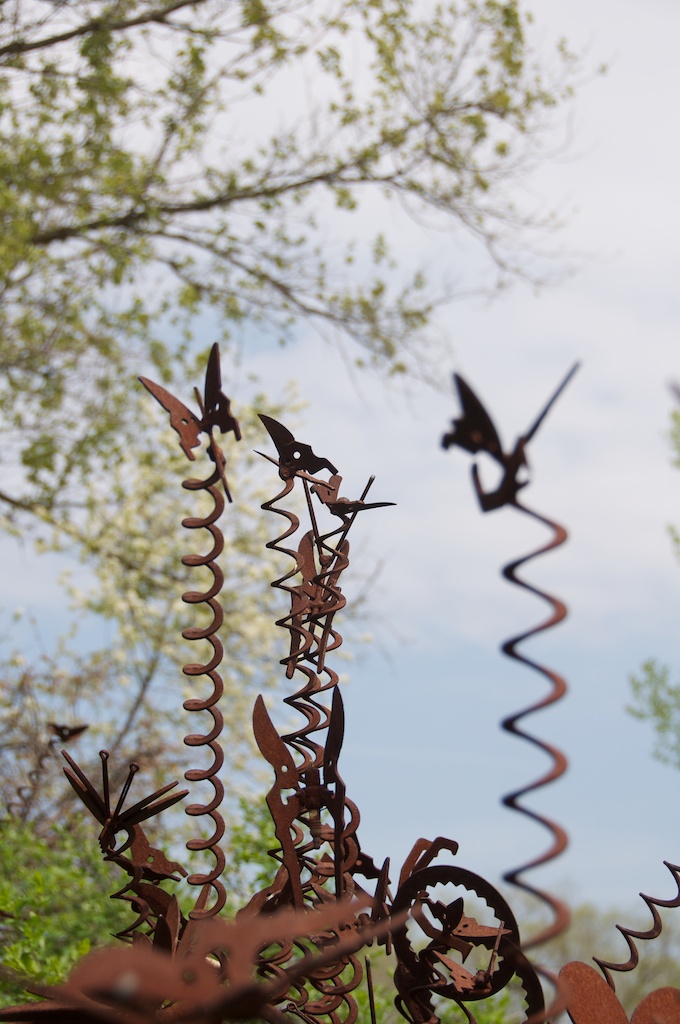
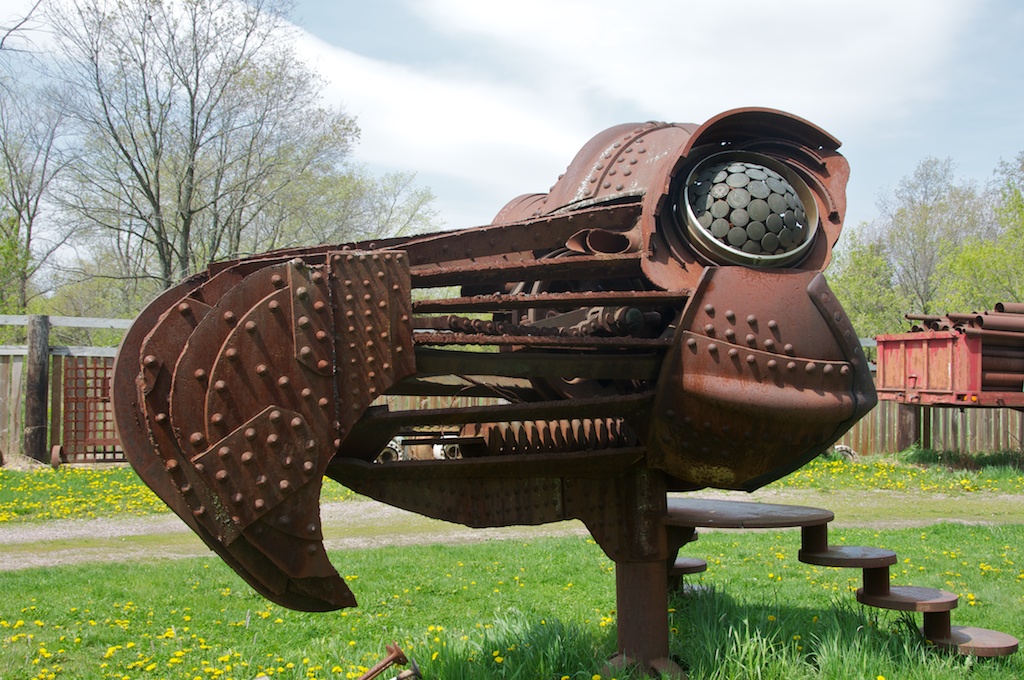
And the Forevertron made the entire Wisconsin junket worth it. See Samuel’s post and our “Thumbs Up” for more.
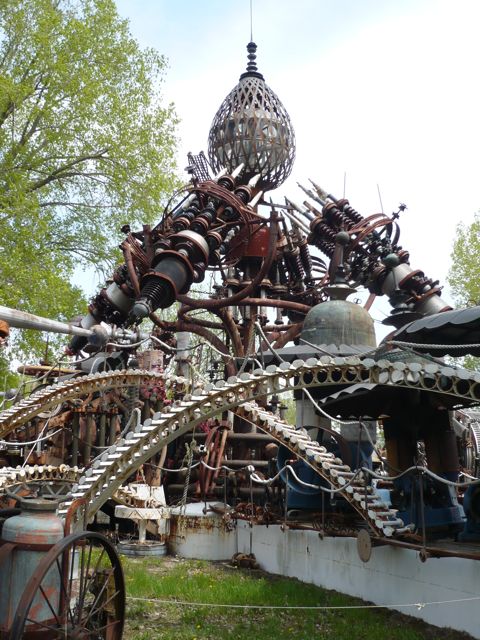
The Forevertron
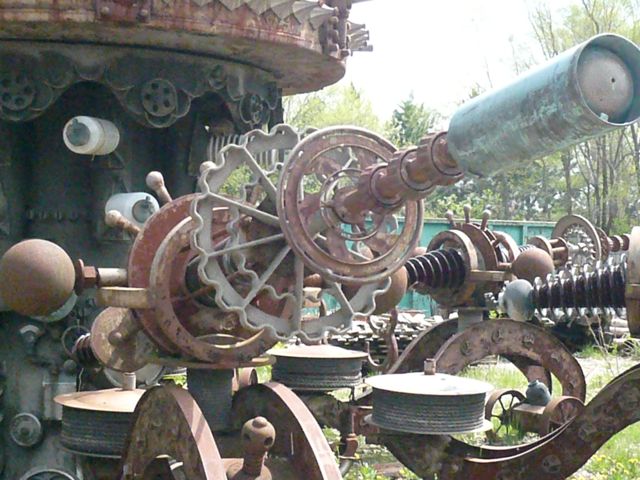
The Forevertron's Love Beam
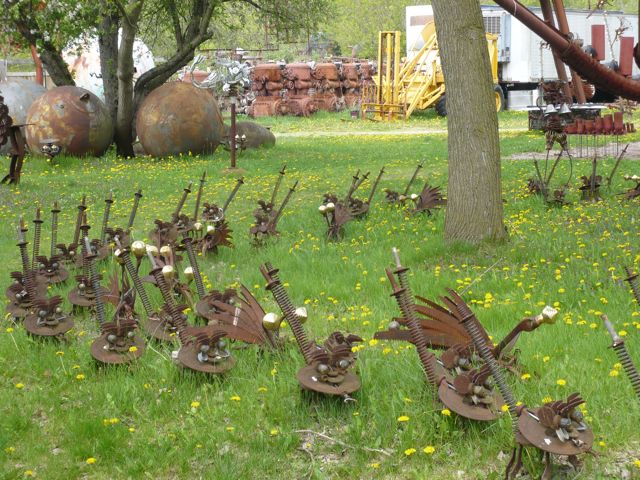
Other Defenders Of The Forevertron
More in Part II–stayed tuned for House On The Rock!